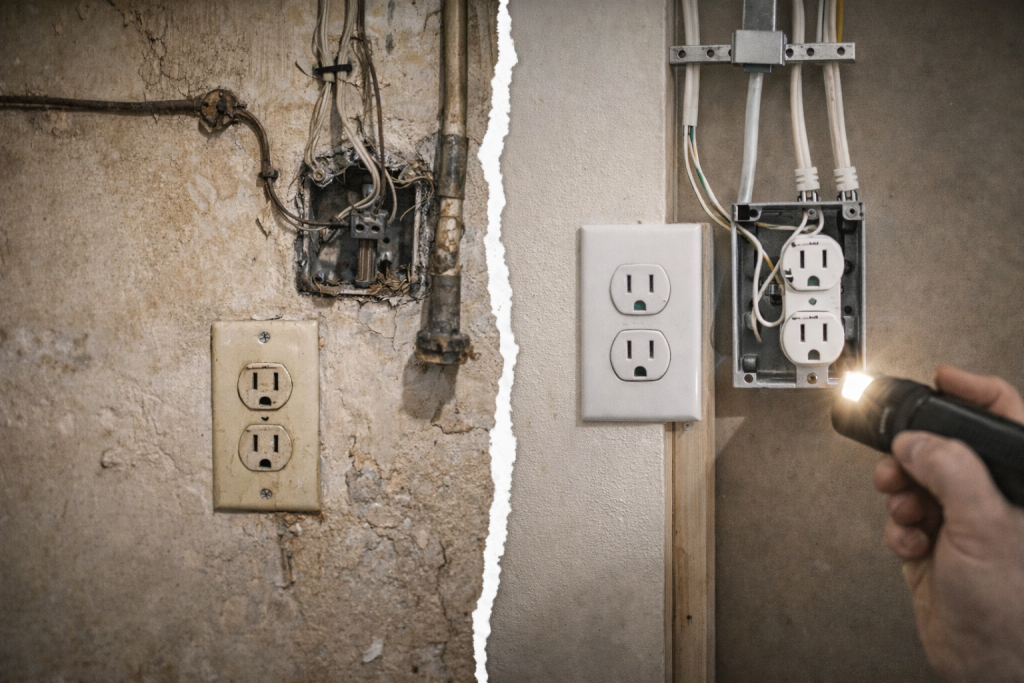
Your older home’s flickering lights or dead outlets aren’t just annoying. These are warning signs of electrical problems and solutions that you just need to fix right away.
Old houses weren’t built to handle today’s electrical usage. The original wiring can’t safely power all our modern appliances, entertainment systems, and smart devices. Outdated electrical panels, faulty wiring, and overloaded circuits create serious dangers – from fire risks to electrocution. Small electrical issues might signal dangerous problems that need attention.
Some wiring problems cause minor hassles. Others put your family’s safety at serious risk. Your home just needs a thorough wiring inspection if it’s over 50 years old or hasn’t been checked before. Let’s look at eight common electrical problems found in old houses and expert solutions that will keep your home safe and working properly.
Outdated Electrical Wiring

Image Source: Teague Electric
Old homes often hide a dangerous secret behind their walls: outdated electrical wiring. A closer look at this vital home system helps homeowners spot what could become serious problems.
What outdated electrical wiring is
Electrical systems installed more than 40 years ago weren’t built to handle today’s power needs. The most common outdated systems include:
- Knob-and-tube wiring (1880s-1930s): Single insulated wires run through ceramic knobs and tubes without proper grounding
- Aluminum wiring (mid-1960s-1970s): The metal expands and contracts more than copper, which leads to loose connections and fire risks
These old systems typically use cloth-wrapped insulation that breaks down over time and lacks modern safety features required by building codes.
Why outdated wiring is dangerous
Old wiring systems put homes at serious risk. The National Fire Protection Association reports electrical failures lead to about 440 civilian deaths and 1,250 injuries each year. These systems also:
- Start electrical fires when insulators fray and short circuit
- Fail to handle the power load from modern appliances safely
- Make insurance companies raise rates or deny coverage
- Create shock risks from outlets without proper grounding
Expert solution for outdated wiring
Safety depends on professional rewiring. The process includes:
- Full electrical safety checks with multimeters and infrared imaging
- New copper conductors that replace old systems
- Modern distribution boards and correctly sized wires
The project costs between $2.97-$5.50 per linear foot. This investment helps prevent fires and keeps families safe.
Too Few Electrical Outlets

Image Source: Fuse Service
Do you find yourself playing “electrical musical chairs” at home? You might have a common problem that plagues older houses – not enough electrical outlets.
What too few outlets means
Most older homes have just one or two outlets per room, and sometimes there’s only one on each wall. This limited setup forces people to use extension cords and power strips as quick fixes that end up becoming permanent. Your home simply wasn’t built to handle all the devices we use today.
Why it’s a problem in old homes
Houses built before the 1970s weren’t designed for modern electrical needs. People living in these homes often resort to dangerous workarounds:
- Overloading circuits by plugging in too many power-hungry devices
- Using extension cords as long-term solutions (creating fire hazards)
- Installing power strips that might overheat from excessive load
These quick fixes can put too much strain on your electrical system and heat up wires to dangerous levels. On top of that, it gets frustrating to keep switching plugs around – a clear sign your home’s electrical system needs an upgrade.
Expert solution for outlet shortages
Your best bet is to hire a licensed electrician to:
- Install new outlets in strategic spots throughout your home
- Set up additional circuits for high-use areas like home offices and kitchens
- Upgrade your electrical panel if needed
This might seem like a big investment, but we’re talking about your family’s safety and peace of mind.
Flickering or Dimming Lights

Image Source: Bates Electric
Your home’s lights mysteriously dim or flicker sometimes? This happens a lot in older houses. It’s not just a spooky coincidence – your electrical system is sending you a warning signal.
What flickering lights indicate
Several problems can make your lights flicker or dim:
- Bad connections in outlets, switches, or your main panel
- Overloaded circuits that can’t handle modern appliances
- Power grid voltage changes
- Wiring behind walls that’s damaged or corroded
- Your electrical panel’s neutral wire acting up
The lights that flicker every time you run appliances like air conditioners or microwaves show that your circuits are close to maxing out.
Why flickering lights are a red flag
These flickering lights are more than just annoying – they signal dangerous electrical problems. Bad wiring creates “arcing” where electricity jumps across connection gaps. This is a big deal as it means that temperatures can reach over 10,000°F. This explains why wiring problems cause almost 70% of house fires.
Expert solution for flickering lights
A licensed electrician should check any serious or ongoing flickering right away. They will:
- Give you a detailed electrical assessment
- Check if the problem is in your house or the power supply
- Fix or replace bad wiring connections
- Add new circuits if needed
The risk of shock, burns, or fire makes DIY electrical work too dangerous – no matter how much money you might save.
Old or Overloaded Electrical Panels

Image Source: JM Electric Inc
Your home’s power system relies on the electrical panel as its command center. Older houses often have panels that pose major risks.
What an outdated panel looks like
Outdated panels typically include:
- Fuse boxes instead of circuit breakers
- Federal Pacific Electric panels (1950s-1980s) with Stab-Lok breakers that fail to trip 25% of the time
- Zinsco panels with aluminum bus bars prone to corrosion
- Panels rated for only 60-100 amps (modern homes need 200+ amps)
- Visible rust, corrosion, or scorch marks
Why old panels are risky
Old electrical panels create serious safety issues. Electrical malfunctions led to 44,880 home fires in 2022, causing 470 deaths and $1.50 billion in property damage. These panels can’t safely handle the power demands of modern appliances, HVAC systems, and smart devices.
Insurance companies often deny coverage to homes with certain panel types. This applies especially when you have Federal Pacific or Zinsco models.
Expert solution for panel upgrades
A new panel installation costs between $2,000-$4,000, though prices can reach $5,000-$25,000 if service upgrades are needed. The panel upgrade offers several benefits:
- Increased capacity for modern appliances
- Improved safety features including proper grounding
- Better energy efficiency
- Higher home value and insurance options
Only licensed electricians should handle panel upgrades – never try this yourself.
Two-Prong or Ungrounded Outlets

Image Source: Nonprofit Home Inspections
Do you see outlets with just two slots instead of three in your home? These old remnants from pre-1960s electrical systems could put your family at risk.
What two-prong outlets are
Two-prong outlets don’t have the vital third hole (ground slot) you’ll find in modern outlets. Houses built before 1962 come with these outlets that only have hot and neutral wiring connections. Modern three-prong outlets provide a grounding path, but these older versions appeared at a time when homes had basic electrical needs and fewer safety rules.
Why ungrounded outlets are unsafe
Your home faces several serious risks with ungrounded outlets:
- The risk of electrical shock rises because excess electricity has no safe path during a fault
- Fire hazards increase due to overheating and electrical arcing
- Your modern electronics and appliances can suffer damage without proper grounding
- Insurance companies might deny coverage for homes with ungrounded outlets
Expert solution for outlet replacement
Professional electricians recommend these three options:
- New three-prong outlets with proper grounding offer the best solution but need rewiring
- GFCI outlets marked “No Equipment Ground” provide shock protection at a lower cost
- A complete circuit upgrade adds proper grounding wires throughout your home
All the same, “cheater plugs” or three-prong outlets without proper grounding create false security while the dangers remain. You should avoid these quick fixes.
Lack of GFCI Protection

Image Source: Horizon Point Inspections
Did you know that wet areas in your home could be dangerous electrical danger zones? A simple task like using a hair dryer near water might turn deadly without proper protection.
What GFCIs are
Ground Fault Circuit Interrupters (GFCIs) are specialized safety outlets that monitor electrical flow. These devices shut off power instantly when they detect even minor current imbalances—typically within 1/40th of a second. You’ll find “Test” and “Reset” buttons on these devices that can detect current differences as small as 5 milliamps.
Why GFCIs are vital in old homes
Most homes built before the 1970s lack GFCI protection because requirements started in 1971 for outdoor outlets. These safety devices are significant because:
- They prevent electrocution in wet areas like bathrooms and kitchens
- Ground faults claim 200 lives annually, which represents two-thirds of all home electrocutions
- GFCIs have reduced electrocutions by 83% since their introduction
- The protection works even in homes without proper grounding
Expert solution for GFCI installation
Homeowners can add GFCI protection to older homes through:
- GFCI receptacles can replace existing outlets in high-risk areas
- GFCI circuit breakers protect entire circuits
- Portable GFCI adapters provide temporary protection
A professional installation costs between $120-200 per outlet. Many homeowners call it a worthwhile investment that prevents electrical accidents and eliminates the need for expensive rewiring.
Buzzing, Hot, or Dead Outlets

Image Source: American Home Shield
Strange noises from your electrical outlets? These unusual symptoms are your home’s electrical system crying for help.
What these symptoms mean
Outlets that buzz or crackle usually point to loose wiring connections or electrical arcing inside. Your outlets feel warm or hot? This suggests overloaded circuits, damaged wiring, or faulty connections. Dead outlets could indicate tripped breakers, GFCI issues, or broken internal components.
Why they signal deeper issues
These symptoms go beyond mere annoyance—they pose serious safety risks. A buzzing outlet often leads to electrical fires caused by loose connections that generate heat and sparks. Hot outlets show dangerous heat buildup that can set nearby materials on fire. Electrical malfunctions cause approximately 44,880 home fires annually. Dead outlets might hide dangerous wiring problems behind your walls.
Expert solution for faulty outlets
When outlets buzz or feel hot:
- Switch off power at the breaker right away
- Get a licensed electrician to check for loose connections, overloading, or damaged wiring
- Replace any outlets with scorch marks or physical damage
When outlets stop working:
- Look at your circuit breaker first
- Test and reset nearby GFCI outlets
- Contact a professional if simple resets don’t work
Note that electrical work rarely suits DIY projects. The risks of shock, fire, or additional damage outweigh any cost savings.
DIY Electrical Fixes Gone Wrong

Image Source: Buell Electric
Many homeowners try to fix electrical problems by watching online tutorials. These DIY projects seem like a good idea but often create dangerous situations that need professional help.
What DIY electrical work looks like
You can spot amateur electrical work by these common signs:
- Loose or exposed wire connections outside junction boxes
- Mismatched wire gages on the same circuit
- Backstabbed outlets (wires pushed into holes instead of secured to terminal screws)
- Reversed hot and neutral wires
- Overloaded circuits with too many devices
- Improperly sized breakers for the wire gage
- Electrical tape used instead of wire nuts
Safety inspectors often find these problems hidden behind walls or inside electrical panels. These create silent hazards throughout your home.
Why it’s dangerous
DIY electrical work brings serious risks beyond just inconvenience. Bad wire connections can create arc faults. These generate temperatures that exceed several thousand degrees and easily ignite surrounding materials. Bad wiring leads to electrocution, which remains the most dangerous outcome of amateur electrical work.
DIY mistakes often stay hidden for months or years before causing fires. These fires usually start at night when families are most vulnerable. A shock from even low voltage can disrupt heart rhythm and lead to cardiac arrest.
Expert solution to correcting DIY mistakes
The best way to fix DIY electrical mistakes involves these steps:
Licensed electricians should assess the situation with specialized tools and their complete code knowledge.
Professional electricians need to inspect beyond visible issues. They know how to trace problems to their source.
Fixing DIY mistakes costs more than getting professional installation done right the first time. The extra cost is worth your family’s safety.
Conclusion
Older homes often face dangerous electrical problems that need immediate attention. This piece highlights how outdated wiring, insufficient outlets, and flickering lights point to serious problems beneath the surface. On top of that, ungrounded outlets and missing GFCI protection put your family’s safety at risk.
Your safety faces direct threats from these electrical warning signs. Fire, shock, or electrocution risks make these problems more urgent than typical home repairs. Electrical malfunctions cause thousands of home fires yearly, which shows why quick action matters.
DIY electrical fixes might seem appealing, but this work needs professional expertise. A licensed electrician can diagnose problems, suggest the right fixes, and make sure everything meets current safety codes. Professional electrical work costs less than fire damage repairs or medical bills from accidents.
Your old house’s charm shouldn’t compromise safety standards. A detailed inspection by a qualified professional helps spot these warning signs in your home. You can then create a plan that tackles the most critical issues first.
It’s worth mentioning that electrical safety isn’t something to gamble with. Quick action protects your family and preserves your home’s future. Without doubt, a safe and reliable electrical system justifies the investment in your peace of mind.