Your circuit breaker keeps tripping even though nothing’s plugged in? This common yet baffling problem frustrates many homeowners. The statistics show that simple overloads cause 80% of residential circuit breaker trips. Yet a breaker keeps tripping without any connected devices might signal a more serious problem hidden within your walls.
A tripping circuit breaker serves as your electrical system’s warning signal. The system alerts you about potential problems like overloads, damaged wiring, loose connections, or failing components. Your breaker isn’t being difficult if it trips right after reset or trips randomly – it’s protecting your home. Circuit breakers trip because of three main reasons: overloaded circuits, short circuits, and ground faults. Ground faults and short circuits raise serious concerns, especially when no devices draw power.
This piece explains what happens during mysterious breaker trips and shows you safe troubleshooting steps. You’ll also learn the right time to call a professional. Safety comes first with electrical problems, so knowing whether to fix it yourself or call an expert could prevent dangerous situations at home.
Why is my breaker tripping with nothing plugged in?
You open your electrical panel and find a tripped breaker, but nothing seems to be using power. This situation leaves many homeowners scratching their heads. The good news is that this mystery isn’t as complicated as it seems. Let’s figure out why your breaker keeps tripping even though nothing appears to be plugged in.
Understanding how breakers work
Circuit breakers protect your home by stopping current flow whenever they detect problems. They offer a big advantage over fuses – you can reset them after they trip instead of replacing them.
These protective devices rely on two main mechanisms:
- Thermal protection – A bimetallic strip that bends when heated by excessive current, triggering the breaker to trip
- Magnetic protection – An electromagnet that responds to sudden current spikes, providing fast protection against short circuits
Your breaker monitors current levels between the electrical supply and your home’s circuits. The breaker automatically cuts power to prevent overheating, fires, or damage to appliances when electricity flowing through reaches unsafe levels.
Why this issue is more common than you think
The reality is that circuit breakers never trip without some electrical load present. Your system always draws some power. Devices might look unplugged, but components like capacitors, diodes, and transistors still need tiny amounts of current.
Modern homes have complex electrical systems with multiple failure points. This makes the problems systemic. Safety data shows that serious conditions cause about 20% of residential circuit breaker trips, and these need immediate attention rather than simple fixes.
What it means when no devices are drawing power
A tripping breaker without visible loads usually signals a hidden electrical problem. These mysterious trips actually help prevent dangerous situations.
A breaker that trips with minimal visible load usually points to one of these issues:
- Current leakage – Electricity flows where it shouldn’t, often through damaged insulation
- Short circuit – Hot and neutral wires make direct contact
- Ground fault – Electrical current leaks to ground because of moisture or damage
- Faulty breaker – Years of use have worn out the breaker itself
The breaker that trips right after you reset it strongly suggests a serious electrical fault. You’ll need professional help. Remember, these aren’t just annoying interruptions – they’re safety features that prevent fires and electrical hazards.
Hidden causes of breaker tripping
The real culprits behind mysterious circuit breaker trips often hide in plain sight. Your breaker might keep tripping with nothing plugged in, yet the source of trouble lurks behind your walls.
1. Faulty or aging circuit breakers
Circuit breakers can wear out as time passes. Most last 30-40 years, but power fluctuations speed up their aging process. A defective breaker trips without an actual overload or short circuit. You should watch for breakers that feel hot, smell like burning, or show scorch marks. The electrical systems in older homes rated at 60-amps struggle to handle modern appliance loads and trip often.
2. Loose wiring or poor connections
Heat builds up at loose connections due to high resistance. This heat melts wire insulation and creates dangerous situations. The usual suspects include:
- Outlet or switch wires that worked themselves loose
- Improperly tightened connections in the electrical panel
- “Backstabbed” wiring where someone pushed wires into quick-connect holes
The system might buzz or lights could flicker under load with these connections.
3. Moisture inside outlets or panels
Water conducts electricity well. So even tiny amounts of moisture create paths for current to flow incorrectly. Moisture sneaks into electrical panels, outlets, or wiring systems after heavy rain and causes short circuits. Basements, outdoor connections, and areas with condensation face this problem often. The breaker acts as a safety guard by tripping to prevent fires or shock hazards.
4. Rodent damage or wire insulation issues
Rodents must gnaw constantly to maintain their teeth, and electrical wiring becomes an unfortunate target. These pests cause approximately 20% of fires with unknown origins. Wire insulation also breaks down from heat, UV exposure, or chemical contact. Strange wall noises, flickering lights, or signs of rodent activity might point to this problem.
5. Breaker tripping immediately after reset
A breaker that trips right after reset signals serious trouble. This behavior points to a dangerous short circuit or ground fault in your wiring. Ground faults happen if current finds an unexpected path to ground through damaged insulation or moisture. Arc faults occur when corroded or loose wires touch briefly and create dangerous sparks. Stop resetting the breaker and call an electrician right away.
Special cases: GFCI and AFCI tripping
GFCI and AFCI breakers provide specialized protection that standard breakers can’t match. These sophisticated devices can trip unexpectedly, leaving homeowners confused when they see nothing plugged in.
How GFCI breakers behave differently
GFCI (Ground Fault Circuit Interrupter) breakers protect people from electrical shock effectively. Standard breakers trip at high currents, but GFCIs detect small imbalances between outgoing and returning current. They trip at around 6 mA, which is nowhere near lethal levels. The system monitors differences between hot and neutral wires and cuts power instantly when current flows unexpectedly through water or a person. Bathrooms, kitchens, and outdoor areas where water might be present need these sensitive protectors.
Common triggers for AFCI breakers
AFCI (Arc Fault Circuit Interrupter) breakers detect dangerous arcing conditions that standard breakers miss. Common triggers include:
- Appliances with motors (vacuums, treadmills) create normal internal sparking
- Electronics like TVs and fluorescent lights
- Loose wire connections or deteriorating insulation
- Moisture or mold infiltration
Some electronic devices or LED indicator lights can trigger AFCIs due to incompatibility.
Why these breakers trip even without load
These breakers might trip with nothing plugged in visibly because they detect:
- Leakage current through deteriorating wire insulation
- Neutral wires from different circuits accidentally connected together
- Hidden moisture causing ground faults
- Parallel faults where damaged insulation allows hot and ground wires to contact
You should break down the cause rather than keep resetting—these trips serve as safety warnings, not annoyances.
How to troubleshoot and when to call a pro
A tripping breaker can frustrate anyone, but safety remains vital when addressing the problem. Let me show you how to handle this situation safely.
Step-by-step safe troubleshooting
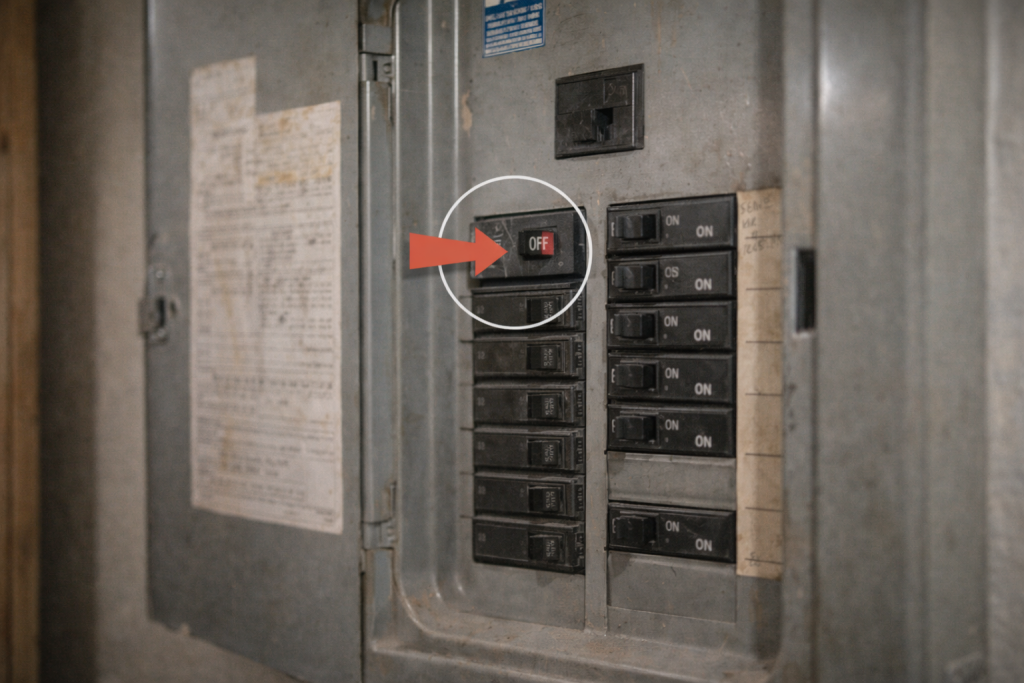
You should turn off all devices on the affected circuit before resetting the breaker. Check your panel for any switch that isn’t completely in the ‘ON’ position. The reset process requires pushing it fully to ‘OFF’ first, then firmly to ‘ON’ until you hear a click. A breaker that trips immediately after reset should never be reset repeatedly—this action could trigger an arc flash or fire.
Signs it’s time to call an electrician
These warning signs mean you need a professional electrician right away:
- Burning smells or visible burn marks on the breaker
- Buzzing, clicking, or humming sounds from the panel
- A breaker that won’t reset or trips instantly
- Partial power loss in certain rooms
- Hot breakers or melted wires
These indicators point to serious electrical problems that need professional expertise. DIY repairs on these issues risk your home’s safety and void most insurance policies.
What Martin’s Electrical can do for you
Martin’s Electrical team excels at diagnosing tripped breakers caused by overloaded circuits. Their licensed experts can identify complex electrical issues, verify your home’s compliance with current electrical codes, and respond to emergency situations involving potential fire hazards. Getting professional help isn’t just convenient—it protects your property and family from electrical dangers effectively.
Conclusion
Circuit breakers that trip mysteriously are protecting your home, even though they might frustrate you. These occurrences serve as warning signals rather than mere nuisances. Your walls might hide dangerous conditions like loose connections, deteriorating insulation, moisture infiltration, or rodent damage without any visible signs.
You can safely check for obvious issues and reset tripped breakers. However, certain signs signal the need for professional help. To cite an instance, breakers that trip right after reset, burning smells, unusual sounds, or components that feel hot indicate serious problems requiring expert attention.
Proper repairs cost much less than ignoring these warning signs. A service call costs $75-150, but electrical fires can lead to catastrophic damage. Your insurance might not even cover damages from ignored electrical warnings.
GFCI and AFCI breakers are sensitive by design to protect against specific hazards. These breakers might detect tiny current leakages or arc faults that standard breakers miss – issues that could start fires.
Your home’s electrical system becomes dangerous when compromised. Simple issues allow basic troubleshooting, but persistent or concerning breaker trips need a licensed electrician’s expertise. Professional intervention isn’t just smart – it protects what matters most: your home and family.