Your family could face hidden risks from old house wiring types if you own an older SoCal home. The U.S. Census Bureau reports that homes built before 1980 make up more than half of all U.S. residences. Many still have their original electrical wiring. These aging systems struggle to meet our modern electrical needs and device requirements.
The reality of electrical wiring problems raises serious concerns. Current safety standards exceed what many older homes offer. Some electrical systems date back to times before 1940. To name just one example, knob-and-tube wiring lacks proper grounding. Aluminum wiring, which was popular during the 1960s-70s, can substantially increase fire risks through overheating and corrosion. Your home’s old electrical wiring needs a licensed electrician’s immediate attention if you notice flickering lights, frequent breaker trips, or burning smells. These signs indicate more than minor inconveniences—they point to serious safety issues.
The implications matter to your safety. Older wiring might be “grandfathered” into electrical codes, but that doesn’t guarantee its safety with today’s electrical demands. This piece examines dangerous old wiring types you might find in your SoCal home. You’ll learn to spot potential hazards and understand whether your house’s electrical problems need professional help or allow DIY solutions.
1. Common Old House Wiring Types in SoCal Homes
SoCal homeowners should know about several outdated wiring systems that could be hiding behind their walls. Many Southern California homes are newer than East Coast properties, but homes over 40 years old often have electrical systems that can’t handle today’s heavy power demands.
Knob-and-tube wiring: what it is and why it’s risky
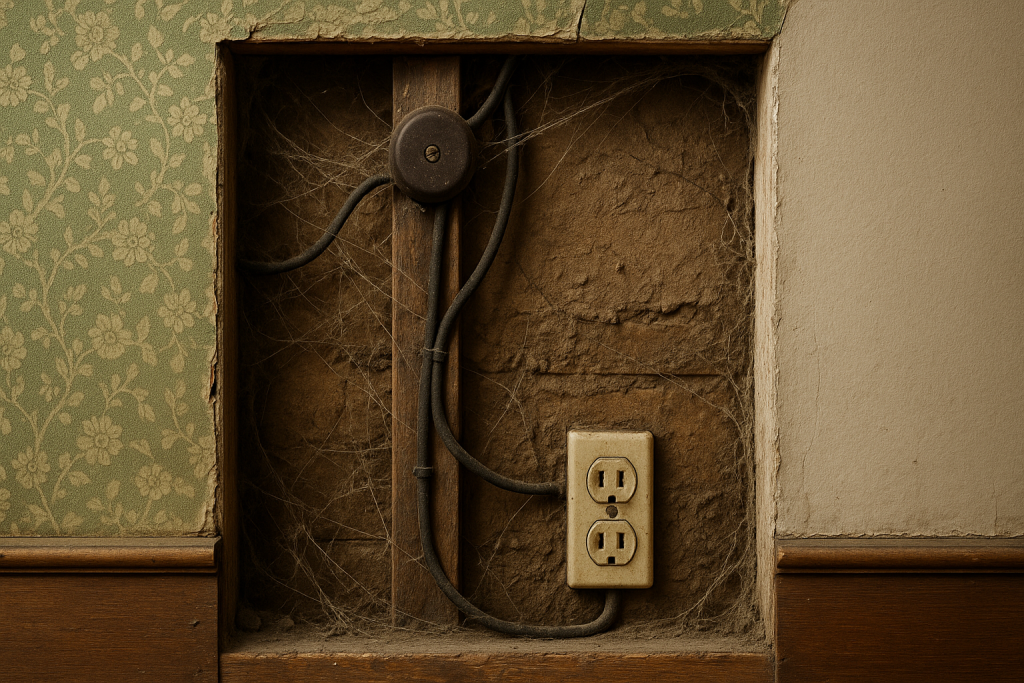
This oldest type of home wiring (used from 1880s-1940s) uses individual copper wires that run through ceramic tubes and attach to porcelain knobs. You won’t find much of it in Southern California, but knob-and-tube creates several dangers:
- Lacks a ground wire, making it unsafe for modern three-prong appliances
- Has rubber/cloth insulation that breaks down and becomes brittle
- Creates serious fire hazards when covered with modern insulation because it needs open air to cool
Insurance companies now typically refuse coverage for homes with active knob-and-tube wiring unless an electrician certifies it.
Aluminum wiring: corrosion and overheating issues
Copper shortages in the 1960s-70s led builders to use aluminum wiring in many SoCal homes. While aluminum conducts electricity well enough, it poses these risks:
- Heat makes it expand and contract more than copper, which loosens connections
- Creates corrosion where it connects to other metals
- Builds up dangerous heat at outlets and switches due to high electrical resistance
- Makes homes 55 times more likely to have “fire hazard conditions” compared to copper wiring
Cloth-insulated wiring: fire hazards and insulation decay
Cloth-wrapped wiring, which was common through the early 1950s, uses rubber-insulated wires with fabric covering. These old systems create multiple problems:
- Age makes the cloth insulation brittle and it falls apart, leaving wires exposed
- Rodents love to chew through the material
- Often contains asbestos
- Moisture damages it easily and it can’t handle modern electrical loads
Two-wire Romex: lack of grounding and limitations
Homes built before the 1960s often have two-wire Romex without the third grounding wire we use today:
- Looks like snake skin or has tarred cloth-like covering
- Creates shock hazards because it can’t ground modern appliances properly
- Can’t handle today’s electrical demands
- GFCI protection helps but doesn’t provide real grounding
These wiring types need a licensed electrician’s attention. The safety risks make DIY repairs too dangerous, regardless of potential cost savings.
2. Warning Signs of Dangerous Electrical Wiring
Your home’s electrical system communicates through warning signs. You just need to understand what they mean. Let’s explore the red flags that show your old wiring might put your safety at risk.
Flickering or dimming lights
Random flickering isn’t just annoying – your electrical system tries to tell you something. Lights that dim or flicker throughout your home usually mean loose wiring connections exist somewhere in your system. This becomes especially concerning when you have older SoCal homes with deteriorating wiring insulation.
Your lights might dim consistently when you use appliances like vacuums or microwaves. This often shows an overloaded circuit that struggles to handle too much power at once. A loose connection in your main electrical panel or service connection could cause flickering in multiple rooms.
Burning smells or discolored outlets
An acrid, chemical-like smell near outlets signals danger. It shows overheating wires or components. Watch for these serious warning signs:
- Yellowing or brown discoloration around outlets and switches
- Scorched marks on outlets or plugs
- Outlets that feel warm or hot without anything plugged in
These signs show that insulation burns or plastic components melt from excessive heat. You need immediate professional help as this creates a significant fire hazard.
Buzzing sounds from switches or walls
A properly working electrical system stays quiet. Buzzing, crackling, or sizzling noises from walls or switches mean electricity arcs—jumping across gaps in loose connections. This creates intense heat that can ignite nearby materials.
Bad circuit breakers can buzz as they let electrical current flow unevenly. These sounds suggest your electrical system has problems and should never be ignored.
Tripping breakers or blown fuses
Circuit breakers that trip often protect you from potential dangers. This usually points to an overloaded circuit, a short circuit, or a ground fault. The wiring in older homes wasn’t designed to handle today’s power demands.
You should identify and fix the cause by unplugging devices from that circuit before resetting a breaker. A professional needs to inspect persistent tripping since it might indicate faulty wiring or damaged insulation.
Loose plugs or outlets that spark
Outlets with plugs that fall out easily have loose internal connections and create serious hazards. Plugs that don’t fit snugly let electricity “arc” between connections. This generates heat and might cause fires.
Visible sparks beyond small static discharges when plugging devices in usually indicate internal outlet damage or loose wiring. These signs mean your old home’s electrical wiring needs professional attention right away.
3. Electrical Wiring Problems and Solutions
Let’s look at ways to upgrade your electrical system now that we’ve spotted potential wiring dangers. Your SoCal home needs quick action to prevent fires, shocks, and other dangerous situations.
Rewiring your home: when and why it’s needed
Your home probably needs rewiring if it’s over 30 years old and still has its original wiring. Old electrical systems can’t handle the power needs of today’s homes. Multiple TVs, computers, chargers, and high-wattage appliances put too much strain on old wiring.
The process has several steps:
- Creating an “electrical inventory” of devices and their locations
- Checking local codes and getting permits
- Replacing old wiring with modern, safer alternatives
This job belongs to professionals only. Rewiring costs range from $2,000 for small homes to $12,000 for larger properties.
Installing GFCI and AFCI protection
Ground Fault Circuit Interrupters (GFCIs) watch current flow to protect against shock. Arc Fault Circuit Interrupters (AFCIs) spot dangerous arcing that might cause fires.
Bathrooms and kitchens must have GFCIs because of water risks. New construction requires AFCIs on most 15 and 20-amp branch circuits. Each AFCI breaker costs between $30-$100.
You can install these protective devices as:
- Breakers directly in your electrical panel
- Receptacles that replace existing outlets
- Deadfront devices installed near the panel
Upgrading your electrical panel for modern loads
Your home’s electrical system depends on its panel. You might need an upgrade if you notice:
- Circuit breakers that trip often
- Lights that flicker when using appliances
- Panels older than 25-40 years
- Visible damage like burn marks or melting
- Strange noises (buzzing, crackling)
Modern homes just need 200-amp service. Many older SoCal homes only have 60 or 100-amp panels. A panel upgrade from 100A to 200A costs about $1,800-$3,500.
Replacing ungrounded or two-prong outlets
Two-prong outlets create more than inconvenience – they lack a vital ground wire that protects electronics and prevents shocks. Here are your options:
- Install a properly grounded three-prong outlet (if ground wiring exists)
- Install a GFCI outlet labeled “No Equipment Ground”
- Run a new ground wire from the receptacle to the main panel
Never swap a two-prong outlet for a three-prong without proper grounding. This breaks code and creates false security.
Adding more outlets to reduce extension cord use
Extension cords should only serve as temporary solutions. Regular use creates serious risks:
- Overheating from overloading can start fires
- Damaged cords might shock you or spark
- Carpet-covered cords trap heat and wear out faster
Additional outlets become necessary if you rely on extension cords. This solution offers more than convenience – it makes your home safer. Well-placed outlets remove the urge to overload circuits or create tripping hazards with cords across walkways.
4. How Old Wiring Affects Safety, Insurance, and Energy Use
Outdated wiring creates problems that most SoCal homeowners rarely think over, well beyond the obvious safety risks.
Home insurance risks with outdated wiring
Insurance companies now see old wiring as a major liability. Your insurer might:
- Substantially increase premiums if you have knob-and-tube or aluminum wiring
- Ask for electrical system upgrades before they cover your home
- Reject claims linked to electrical damage
- Refuse coverage altogether for homes with outdated electrical systems
Energy loss from poor conductivity
Your old wiring wastes electricity by creating resistance and generating heat. Aluminum wiring systems conduct electricity less effectively than copper. This energy leakage appears on your monthly bills. Worn insulation lets electricity escape and drives up costs through unnecessary power consumption.
Smart home compatibility issues
Smart devices need steady, reliable power that old wiring systems cannot deliver properly. Most smart switches need neutral wires, which older homes lack. Old electrical systems also cannot handle multiple smart devices running at once.
Code violations and home resale concerns
Outdated wiring becomes a major obstacle during home sales. Home inspections often reveal electrical problems that create financing hurdles for buyers. Most lenders reject mortgage applications for homes with unresolved code violations. Home electrical problems cause 53,600 fires each year, resulting in over 500 deaths and $1.4 billion in property damage.
Conclusion
Outdated electrical wiring creates more than just hassles—it’s a serious safety threat lurking in your SoCal home. Knob-and-tube, aluminum, and cloth-insulated wiring systems pose fire and shock hazards that endanger your family. Modern electrical needs have outgrown these aging systems completely.
Your home sends clear warning signals. You might notice flickering lights, catch burning smells, hear buzzing sounds, or deal with breakers that trip often. These signs point to problems you can’t afford to ignore.
DIY electrical repairs might seem appealing, but wiring problems need professional expertise. Licensed electricians can assess your home’s electrical system properly and suggest vital upgrades like rewiring, panel replacements, or GFCI/AFCI protection. The cost ranges from $2,000 to $12,000 based on home size, but this investment safeguards your family and property effectively.
Upgrading your electrical system brings several key advantages. Insurance companies often reward safer homes with better rates or continued coverage. Your energy costs drop through improved efficiency, and your home becomes compatible with modern smart devices. These improvements also prevent complications when you decide to sell.
Your family’s safety deserves immediate attention. Homes over 30 years old without electrical upgrades need professional inspection quickly. The peace of mind makes it worthwhile.