The San Gabriel Valley real estate market is hot. Flippers are buying older homes in Covina, West Covina, and La Verne, slapping on gray vinyl flooring, quartz countertops, and white paint, and putting them back on the market in 60 days.
They look beautiful. But as electricians, we see what lies beneath the surface.
In our experience, electrical work is the #1 place where flippers cut corners. They hire unlicensed handymen to swap outlets and hang chandeliers, often ignoring the dangerous wiring hidden in the walls.
If you are buying a flipped home, here is your safety checklist to ensure you aren’t buying a fire hazard.
1. The “Bootleg Ground” (The Fake Safety)
This is the most common and dangerous trick we see.
Older homes often have 2-wire ungrounded wiring. Flippers know buyers want 3-prong outlets. Instead of rewiring the house (expensive), they install 3-prong outlets and connect the “Ground” screw to the “Neutral” screw with a tiny jumper wire.
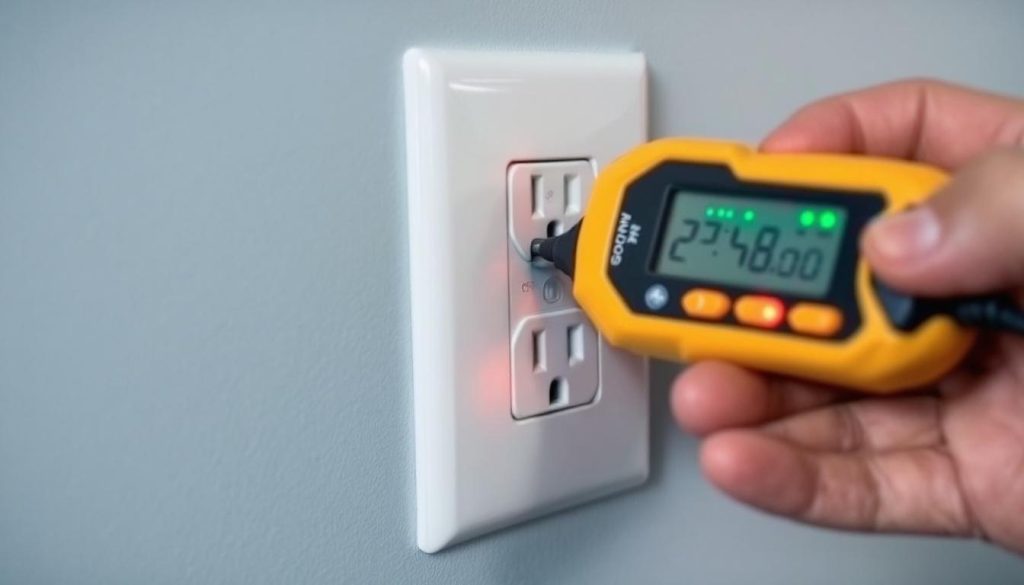
- The Deception: Your plug tester will light up “Correct” and say it’s grounded.
- The Danger: It is a lie. If there is a fault, the electricity that *should* go to ground now energizes the case of your appliance (your fridge, your toaster). If you touch it, you become the ground.
Detection: We open a few random outlets during inspection to check for this illegal jumper wire.
2. Buried Junction Boxes
When flippers move walls or add recessed lighting, they create wire splices. By code, every splice must be inside an accessible junction box.
Often, we find splices wrapped in electrical tape and buried inside the ceiling or wall, then drywall and painted over.
- The Danger: If that splice loosens and sparks, it sparks inside a flammable wall cavity. And because it’s buried, you can’t find it without cutting holes.
3. Painting Over the Panel
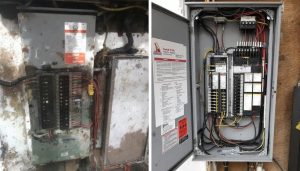
Flippers spray paint *everything*—including the electrical panel. We often open a panel to find the breakers, bus bars, and wires coated in white overspray.
- The Danger: Paint is an insulator. It can cause breakers to overheat or fail to make proper contact. It also voids the UL listing of the equipment. A painted bus bar is an immediate fail on a safety inspection.
4. Cloth Wiring with New Switches
Just because the switch looks modern and white (Decora style) doesn’t mean the wiring is new.
We frequently see brand new dimmers connected to crumbling 1940s rag-wire insulation. The motion of pushing the thick new switch into the small old box often cracks the insulation on the old wires, creating a short circuit risk immediately behind the switch plate.
5. Recessed Lights Without IC Rating
Recessed lighting is standard in flips. But if they install non-IC (Insulation Contact) rated cans into an attic full of insulation, the heat from the light can ignite the insulation.
Modern LED wafers mitigate this, but we still see incorrect cheap fixtures used to save $5 per light.
How to Protect Yourself
1. Demand a Permit History: Ask to see the finalized electrical permits for the renovation. If they did a “kitchen remodel” without an electrical permit, assume the wiring wasn’t inspected.
2. Get a Specialized Electrical Inspection: A general home inspector looks at a lot, but they don’t open boxes. Hire a licensed electrician to perform a “Level 2” inspection. We pull outlets, check torque on the panel, and identify bootleg grounds.
Don’t let quartz countertops distract you from fire safety. If you are in escrow on a flip, call Martin’s Electrical for a pre-purchase electrical audit.