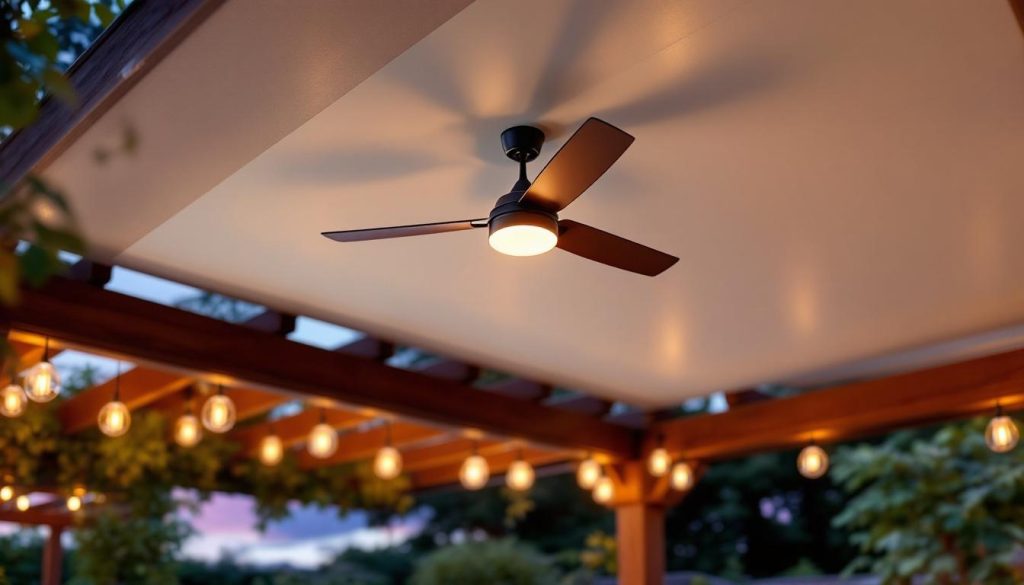
Outdoor spaces like patios and pergolas have become extensions of our living areas, providing a perfect place for relaxation and entertaining guests. With the right amenities, these spaces can offer comfort comparable to any indoor room. One essential addition that homeowners in San Dimas often consider is an outdoor ceiling fan. This guide will walk you through the practical aspects of outdoor ceiling fan installation, focusing on the electrical ratings essential for a safe and efficient setup.
Why Install an Outdoor Ceiling Fan?
Outdoor ceiling fans are not just about keeping cool. They enhance the overall ambiance of your outdoor space, circulate air to deter pests, and offer a functional lighting option when equipped with integrated lights. By choosing the right fan for your patio or pergola, you ensure comfort and style that complements your outdoor decor.
Key Considerations for Outdoor Ceiling Fan Installation
When embarking on an outdoor ceiling fan installation project, several considerations ensure the fan operates safely and effectively. Here’s what you need to know:
1. Wet-Rated vs. Damp-Rated Fans
Outdoor ceiling fans come in two primary ratings: wet-rated and damp-rated. Understanding the difference is crucial for proper installation:
– Wet-Rated Fans: These fans are designed to withstand direct exposure to rain and moisture. They are suitable for open patios and pergolas where they may be exposed to the elements.
– Damp-Rated Fans: Best for areas that are covered and protected from direct moisture, such as screened-in porches or covered patios.
Choosing the wrong type can lead to safety hazards and reduced fan lifespan. Martin’s Electrical & Lighting recommends consulting our electrical repair experts for advice on the appropriate fan type for your specific outdoor setting.
2. Electrical Capacity and Safety
Before installing an outdoor ceiling fan, it’s important to assess your outdoor electrical system’s capacity. Fans require a safe connection to your home’s electrical system, which may involve:
– Checking Circuit Capacity: Ensure the circuit can handle the additional load. Overloading a circuit can lead to circuit breaker tripping or other electrical issues.
– Grounding Requirements: Proper grounding is essential for safety. Ungrounded installations can pose serious hazards, as discussed in our article on ungrounded outlets.
– Wiring Considerations: Outdoor wiring should be durable and weather-resistant. Our rewiring services can ensure that your installation meets local codes and safety standards.
3. Fan Size and Placement
The size of the fan and its placement are crucial for optimal airflow and effectiveness:
– Blade Span: Larger areas require fans with a larger blade span to effectively circulate air. For patios, a 52-inch fan is often suitable, while larger pergolas might require a 60-inch fan or more.
– Height and Clearance: Ensure the fan is installed at an appropriate height. Generally, a clearance of at least 7 feet from the floor is recommended for safety.
4. Additional Features
Consider additional features that enhance the functionality of your outdoor fan:
– Lighting Kits: Integrated lighting can add utility and ambiance. Choose LED options for energy efficiency.
– Remote Controls: Modern fans often come with remote controls or smart home integration, providing convenient operation.
Electrical Ratings and Requirements for Outdoor Ceiling Fans
Understanding electrical ratings is critical to ensuring both safety and performance. Here are some aspects you should consider:
Voltage and Amperage
Most outdoor ceiling fans operate at standard residential voltages (120V). However, it’s important to verify that your circuit can handle the amperage required by the fan, especially if it includes additional features like lights or heaters.
Energy Efficiency
Look for energy-efficient models that carry an Energy Star rating. These fans use less electricity, lowering your energy bills while providing effective air circulation.
Compliance with Local Codes
In San Dimas, and throughout California, state and local codes must be adhered to during installation. Compliance ensures that your installation is safe and legal. Martin’s Electrical & Lighting ensures all electrical services are performed in accordance with local regulations.
Installation Steps for Outdoor Ceiling Fans
While some homeowners may be tempted to tackle outdoor ceiling fan installation as a DIY project, it is often best left to professionals. Here are the general steps involved:
1. Site Assessment
A thorough assessment of the installation site is crucial. This includes checking the structural integrity of the mounting location and ensuring ample space for air circulation.
2. Power Source Identification
Identify a suitable power source. This may involve installing a new circuit or utilizing an existing one, provided it has the capacity. Our whole house mapping service can help identify the best power source locations throughout your home.
3. Mounting
Secure mounting is essential. Outdoor fans often come with specific mounting hardware designed to withstand the elements. Proper installation prevents wobbling and ensures longevity.
4. Wiring and Connections
Wiring should be done by a licensed electrician to ensure all connections are safe and compliant. This includes securing wire connections and ensuring all components are properly grounded.
5. Testing and Adjustment
Once installed, the fan should be tested to ensure it operates correctly. Adjustments may be needed to balance the blades or fine-tune the fan speed.
Why Choose Martin’s Electrical & Lighting for Your Installation?
Choosing a professional service like Martin’s Electrical & Lighting offers several advantages:
– Expertise and Experience: With decades of experience serving San Dimas and surrounding areas, our team is well-versed in local regulations and best practices for outdoor installations.
– Licensed Professionals: Our electricians are fully licensed, ensuring that every installation is performed to the highest safety standards.
– Comprehensive Service: From panel upgrades to EV charger installations, we offer a wide range of services to meet all your electrical needs.
– Customer Satisfaction: We pride ourselves on our reputation for reliability and quality service. Our customer reviews speak to our commitment to excellence.
Common FAQs About Outdoor Ceiling Fan Installation
What is the cost of installing an outdoor ceiling fan?
The cost can vary based on factors such as the complexity of the installation, the type of fan, and any additional electrical work needed. For a comprehensive quote, request a free estimate.
How long does the installation process take?
Typically, installation can be completed within a few hours. However, this may vary depending on site conditions and additional electrical work required.
Can I install a regular indoor fan outdoors?
No, indoor fans are not designed to withstand outdoor conditions and can pose safety hazards if used outside. Always use fans specifically rated for outdoor use.
How can I maintain my outdoor ceiling fan?
Regular cleaning and checks for loose hardware are essential. Ensure that the fan blades are clean and balanced and that all parts are securely fastened.
Enhance Your Outdoor Space with Confidence
Outdoor ceiling fans are a practical investment that enhances the comfort and appeal of your patio or pergola. By understanding the electrical requirements and entrusting the installation to professionals like Martin’s Electrical & Lighting, you ensure a safe, efficient, and long-lasting addition to your home.
If you’re considering an outdoor ceiling fan installation in San Dimas, don’t hesitate to contact us or call Martin’s Electrical & Lighting. Our team is ready to provide expert guidance and ensure your project meets all safety and operational standards. For more insights and tips on electrical installations, visit our blog.