If you own a charming craftsman bungalow in Glendora, a historic Victorian in Covina, or a Spanish revival home in Pasadena, you love the character of your property. But hidden behind those lath-and-plaster walls might lurk a century-old electrical system that is threatening your safety and your insurance coverage.
We are talking about Knob and Tube (K&T) wiring.
Installed primarily between the 1880s and the 1940s, this was the state-of-the-art technology of its day. Today, in 2026, it is widely considered an obsolete safety hazard. While having K&T doesn’t panic every homeowner, understanding the risks—and why insurance companies hate it—is critical for protecting your investment.
Here is the definitive guide to handling Knob and Tube wiring in modern San Gabriel Valley homes.
What is Knob and Tube Wiring?
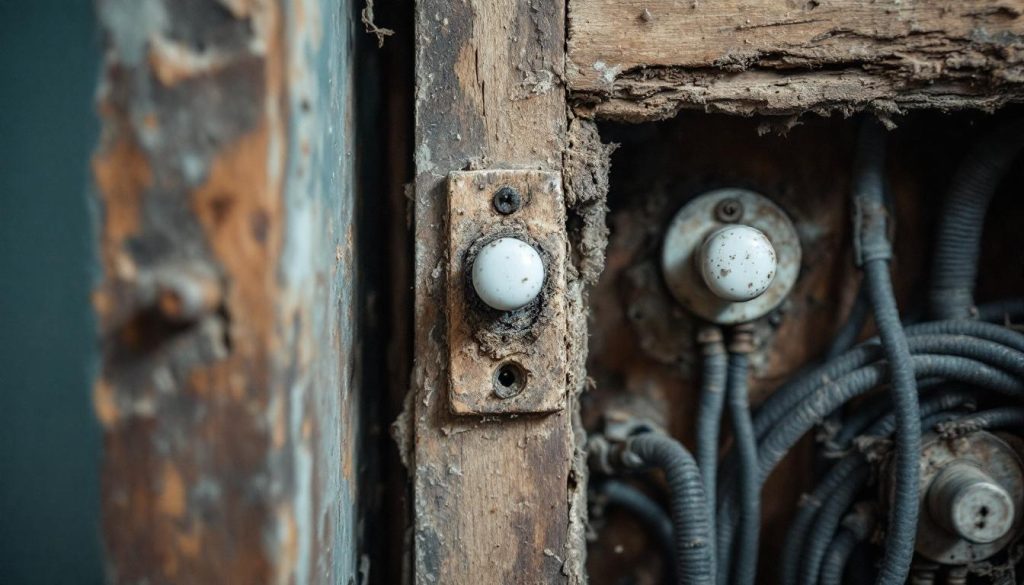
Knob and Tube looks nothing like modern wiring (Romex).
- The “Knobs”: White ceramic spools nailed to the wooden joists. The wires wrap around these knobs to keep them taut and away from the wood.
- The “Tubes”: Ceramic tubes inserted through holes drilled in the studs. The wires pass through these tubes to protect them from chafing against the wood.
- The Wires: Single strands of copper wire covered in a rubberized black cloth insulation.
Critically, the hot wire (black) and the neutral wire (white) run separately, often inches apart. In modern wiring, they are bundled together in a plastic sheath.
The 4 Safety Dangers of K&T
Knob and Tube isn’t inherently dangerous just because it’s old. If it were pristine and untouched inside a wall, it might work fine. The danger comes from age and modern usage.
1. Breakdown of Insulation
The cloth and rubber insulation on these wires was meant to last 25-30 years. It is now approaching 100 years old. In hot attics and walls, this insulation becomes brittle. It cracks and flakes off, leaving bare live copper wire exposed.
- *The Risk:* If that bare wire touches a pipe, a nail, or a curious rodent, it arcs and sparks. In a wall filled with dry wood and dust, this is a fire starter.
2. No Ground Wire
This is the biggest functional defect. K&T uses only a hot and a neutral wire. There is no Ground wire.
- *The Risk:* Modern electronics (computers, TVs, appliances) rely on the ground wire to discharge excess electricity (surges) safely. Without a ground, a surge can fry your expensive appliances or shock you when you plug something in. You cannot safely install 3-prong outlets on a K&T circuit.
3. “The Handyman Special”
Over the last 80 years, previous owners likely messed with the wiring. We often see amateur modifications where modern Romex wire is spliced onto old K&T with electrical tape (unsafe) instead of proper junction boxes. These localized hot spots are where fires start.
4. Insulation Overheating
K&T was designed to dissipate heat into the open air space inside the wall. If a well-meaning homeowner blows catchy-foam or cellulose insulation into the walls to improve energy efficiency, they trap that heat. The wires can overheat rapidly and ignite the insulation surrounding them.
The Insurance Problem
Even if you aren’t worried about the safety, your insurance carrier is.
Many major insurers (State Farm, Allstate, etc.) will refuse to write a new policy or renew an existing one if they know the home has active Knob and Tube wiring.
- *The Inspection Surprise:* This often kills real estate deals. A buyer’s inspector finds K&T in the attic, the buyer calls their insurance agent, and the agent says, “We can’t insure it until it’s rewired.” Alternatively, they might offer a high-risk policy at 3x the standard premium.
How to Identify It
You don’t need to tear open walls to check.
1. Look in the Attic or Basement: These are the exposed areas. Look for the white ceramic knobs on the joists.
2. Check Your Outlets: Do you have 2-prong outlets? This is a sign of ungrounded wiring (though not always K&T).
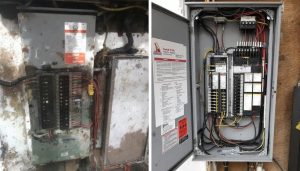
3. Check the Panel: Is your panel original? Knob and Tube systems were designed for 60-amp service. A modern home needs 200 amps.
The Solution: Whole House Rewiring
There is no “repair” for Knob and Tube. You cannot upgrade it. It must be replaced.
At Martin’s Electrical, we specialize in whole house rewiring for historic homes in the San Gabriel Valley. The process involves:
1. Mapping: We perform a whole house audit to trace exactly which circuits are old.
2. Access: We strategically cut small holes in the drywall/plaster to fish new copper Romex wire through the walls. We respect the historic nature of your home and minimize damage.
3. Panel Upgrade: We usually install a new 200-amp panel to handle the modern load.
4. Grounding: We ensure every outlet is properly grounded for safety.
Don’t Wait for a Spark
If you suspect your home still runs on 1920s technology, don’t wait for a flicker or a burning smell. Upgrading your wiring increases your home’s value, makes it insurable, and most importantly, lets you sleep safely at night.
Contact Martin’s Electrical for a free assessment. We can verify if your wiring is safe or if it’s time to bring your historic gem into the 21st century.