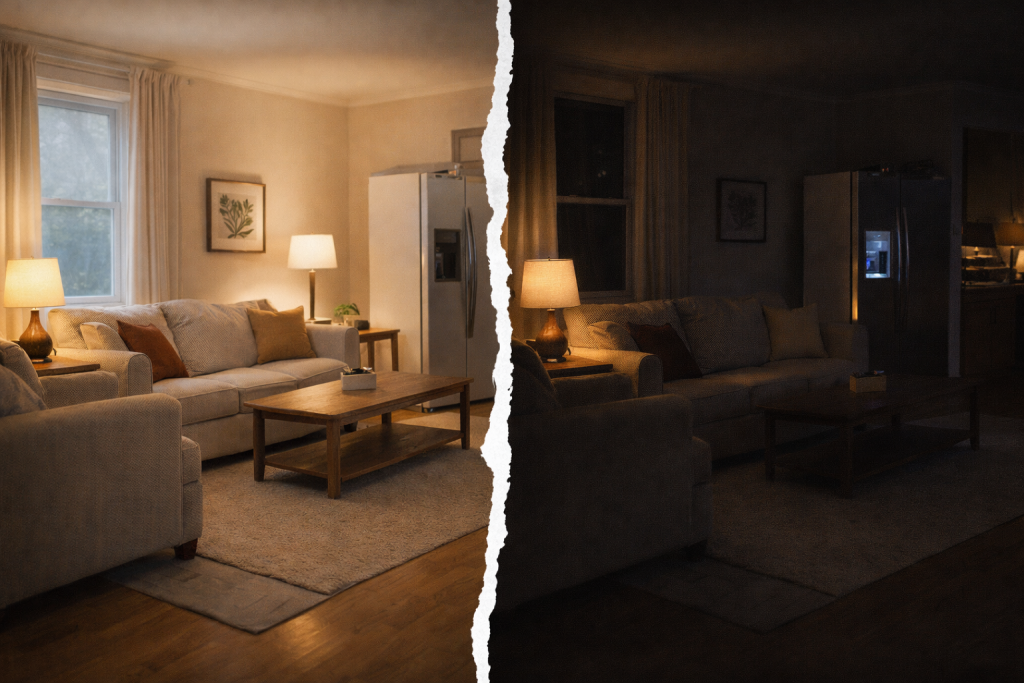
Your lights dimming as appliances turn on might seem familiar. This common household issue isn’t just annoying—it could signal electrical issues that need your attention.
The lights in your house dim at the time appliances power up, especially with power-hungry devices like air conditioners, refrigerators, or washing machines. These devices just need a lot of electricity during startup. The appliance pulls a large amount of power from the circuit that connects to your lights. The biggest problem occurs because residential electrical circuits have limited power capacity. The circuit becomes overloaded once power usage goes beyond this limit.
This happens especially when you have older homes with electrical wiring that wasn’t built to handle today’s power demands. Your circuit’s capacity can be overwhelmed if you plug in multiple power-hungry appliances. This leads to those noticeable voltage drops as your microwave or other appliances start running. This is a big deal as it means that overloading old wiring creates a safety hazard and increases the risk of electrical fires.
In this piece, you’ll find what’s really happening behind your walls during these light dims. You’ll learn which problems need immediate attention and get practical fixes—whether you can handle it yourself or should call a professional.
What Causes Lights to Dim When Appliances Are Turned On
Your lights dim as the refrigerator kicks on. This common household occurrence happens due to inrush current – a phenomenon where motors just need much higher current to start spinning compared to their regular operation.
A sudden power surge from major appliances creates a temporary voltage drop in your home’s electrical system. You’ll notice this most with:
- Air conditioners and heat pumps
- Washing machines and dryers
- Refrigerators
- Electric stoves
- Microwaves
These dimming lights might point to an overloaded circuit, especially if several power-hungry devices run on the same circuit. Light output drops significantly with voltage changes – a 10% voltage drop reduces incandescent bulb brightness by over 25% and fluorescent tubes by 15%.
Older homes face this issue more because their wiring wasn’t built to handle today’s appliance power demands. Small devices causing similar problems could signal serious wiring issues that need a professional electrician’s inspection.
The dimming might seem like a minor annoyance. In spite of that, regular voltage changes can damage your sensitive electronics and make your electrical system overheat. This extra strain reduces your equipment’s lifespan and could create dangerous safety issues if you ignore it.
Electrical System Issues That May Be to Blame
Those flickering lights in your home might reveal deeper electrical system problems. Your home’s electrical infrastructure could be showing signs of trouble, even though brief dimming seems harmless.
Outdated Electrical Panel
Light dimming problems usually start with an undersized or outdated electrical panel. Older homes typically have panels that max out at 100 amps, but modern homes just need 150-200 amps to run safely. Your panel’s job is to distribute power throughout your home. Lights will flicker when the panel struggles to meet power needs, especially as large appliances kick in.
Loose or Corroded Connections
Loose neutral wire connections create dangerous situations. A compromised neutral path throws electrical currents off balance and can cause overvoltage on one circuit leg while creating under-voltage on another. Loose connections also heat up at junction points, which creates fire hazards.
Wiring Problems
Builders used aluminum wiring in the 1960s-70s to replace copper. This aluminum corrodes when it touches copper and creates loose connections that can spark fires. The wiring in older homes wasn’t built to handle today’s electrical loads, which strains the entire system.
Warning signs shouldn’t be ignored. These include frequent breaker trips, buzzing sounds from your panel, and lights that dim when appliances run. These problems create real safety risks that need professional help.
Safety First: Electrical panel or home wiring repairs should be handled by licensed electricians rather than DIY solutions. Amateur repairs can be dangerous and might violate building codes.
How to Fix Dimming Lights in Your Home
Your flickering lights won’t stop until you tap into the root causes in your electrical system. We just need to think over three solutions that work.
A dedicated circuit for power-hungry appliances like refrigerators, microwaves, and air conditioners makes a huge difference. This stops them from pulling power away from your lighting circuits and eliminates those frustrating brightness dips.
Your electrical panel might also just need an upgrade from 100-amp to 200-amp service. This costs about $7000 but delivers stable power that meets today’s electrical demands.
LED bulbs offer another solution that many people overlook. These bulbs use less power and handle voltage changes better than traditional ones. LEDs cut down electricity usage by a lot, which makes them a budget-friendly fix for dimming issues.
When problems don’t go away, get a professional electrical inspection. A licensed electrician can spot hidden problems like:
- Bad wire connections
- Shared neutral connections
- Old panels that can’t handle modern needs
- Wrongly installed wiring
Lights that keep switching between bright and dim point to a dangerous loose neutral wire that needs immediate expert help. Note that your safety matters more than convenience or cost when it comes to electrical issues.
Conclusion
Dimming lights might look like a small problem, but they tell us a lot about your home’s electrical health. These flickers happen because power-hungry appliances just need a lot of electricity to start up. This creates short voltage drops in your system.
Your home’s electrical system faces bigger challenges now than ever before. Most households run multiple devices at once. This puts pressure on systems that weren’t built to handle such loads. The problem shows up more in older homes that have outdated wiring or small electrical panels.
You shouldn’t ignore these warning signs. Loose connections, overloaded circuits, and old panels can create real fire hazards that put your family at risk. Quick action to solve these problems protects your appliances and home.
You have several ways to fix dimming lights. Installing dedicated circuits for major appliances usually solves the issue. A upgrade to a 200-amp panel offers a more complete solution. On top of that, LED bulbs are a simple first step that use less power and handle voltage changes better.
Note that electrical work can be dangerous. While you can change light bulbs yourself, circuit installations and panel upgrades need professional help. A qualified electrician can spot your specific issues and create safe solutions that meet local codes.
Your home’s electrical system runs quietly until it needs help. Taking care of warning signs now stops bigger problems later. Stable lighting makes your home more comfortable and shows that your electrical system is safer and more reliable.