Ceiling fans remain one of the most practical upgrades for San Gabriel Valley homes. They reduce cooling costs during the long Southern California warm season, improve air circulation year-round, and add visual appeal to bedrooms, living rooms, and covered patios. But the cost to install one varies dramatically depending on whether you have existing wiring in place, the ceiling height, and the complexity of the fan you choose.
Understanding the real costs involved — not just the price of the fan itself — helps you budget accurately and avoid surprises when the electrician arrives. This guide breaks down what ceiling fan installation actually costs in the San Gabriel Valley in 2026, what factors drive prices up or down, and when you need a licensed electrician versus when a simpler approach works.
Cost Summary: What to Expect
The total cost of ceiling fan installation depends primarily on one question: is there already a ceiling electrical box where you want the fan?
Replacement installation (existing fan or light fixture with proper box):
– Labor: $75 to $200
– Total with fan: $200 to $500
– Timeline: 30 to 60 minutes per fan
New installation (no existing wiring at location):
– Labor: $250 to $600
– Total with fan: $400 to $1,000+
– Timeline: 2 to 4 hours per fan
– Includes running new wiring from the nearest junction box or panel, installing a fan-rated electrical box, and mounting the fan
High ceiling installation (vaulted, cathedral, or two-story ceilings):
– Additional cost: $100 to $300 above standard rates
– Requires scaffolding or specialty ladders
– Extended downrod and specific mounting hardware required
Dual-switch or smart wiring (separate fan and light controls):
– Additional cost: $75 to $200
– Running a second switch leg from the fan box to the wall switch
– Recommended for living rooms and bedrooms where independent control adds convenience
These ranges reflect San Gabriel Valley labor rates for licensed electricians in 2026. Handyman rates run lower but carry considerations covered later in this article.
What Drives the Cost Up
Several factors push ceiling fan installation toward the higher end of the price range. Knowing these in advance helps you make decisions that fit your budget.
No existing ceiling box. If you are adding a fan where only a blank ceiling exists, the electrician must open the ceiling, install a fan-rated box secured to framing, run new Romex cable from a power source, connect to the circuit, patch the access point, and install the fan. This is a significantly more involved project than swapping an existing fixture.
Fan-rated box requirement. Standard light fixture boxes are not rated for the weight and vibration of a ceiling fan. If your existing box is only rated for a light fixture (most support a maximum of 50 pounds static load), it must be replaced with a fan-rated box before a fan can be safely mounted. This adds $50 to $100 in parts and labor if the box is accessible from above.
Ceiling height over nine feet. Higher ceilings require extended downrods, specialty hardware, and additional time to work safely at height. Two-story foyer fans are particularly labor-intensive because scaffolding setup adds significant time to the project. If your San Gabriel Valley home has vaulted living room ceilings, expect to pay the premium end of the range.
Wire fishing through finished ceilings. Running new wire through finished ceilings without creating excessive access holes requires skill and specialty tools (fish tape, flex drill bits). Plaster ceilings common in older Glendora and San Dimas homes are particularly challenging and time-consuming compared to standard drywall.
Permit requirements. New electrical work (not a like-for-like fixture replacement) technically requires a permit in most San Gabriel Valley cities. Adding new wiring for a fan where none existed before falls into this category. Permit fees typically run $75 to $150 and add inspection coordination to the project timeline.
What Keeps Costs Down
Conversely, several factors make ceiling fan installation straightforward and affordable.
Existing fan or light with fan-rated box. If you are replacing an existing ceiling fan or have a light fixture mounted on a fan-rated box, the installation is essentially a swap. Disconnect the old fixture, connect the new fan, mount, and test. This is the most common scenario and the least expensive.
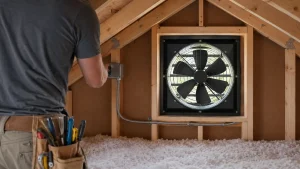
First-floor rooms with attic access above. When an electrician can access the ceiling from above (through an attic), running new wire and installing boxes is dramatically easier than fishing wire through a finished ceiling from below. Attic access cuts new-installation labor time roughly in half.
Multiple fans in one visit. If you are installing fans in several rooms during the same appointment, most electricians offer a per-fan discount on the second and subsequent units. Setup time, travel, and initial assessment are one-time costs that get spread across multiple installations.
Pre-purchased fan with standard mounting. If you buy the fan yourself and it uses a standard mounting bracket (most major brands do), the electrician focuses solely on the electrical and mounting work rather than sourcing and marking up the fixture.
Electrician vs. Handyman: When It Matters
The cost difference between a licensed electrician and a general handyman for ceiling fan installation can be $100 to $200 per fan. Here is when that price difference is justified and when it may not be.
You need a licensed electrician when:
– New wiring needs to be run to a location without existing electrical
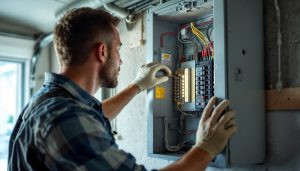
– A circuit is being extended or a new circuit pulled from the panel
– The fan includes a hard-wired remote receiver that connects to your home automation system
– Your home has aluminum wiring (requires specific connection methods)
– You are installing a fan on a circuit that already trips under load (indicating capacity issues)
– You want permit and inspection coverage for the work
A qualified handyman may be sufficient when:
– You are replacing an existing fan with a same-type replacement
– The existing electrical box is already fan-rated and properly mounted
– No new wiring is involved whatsoever
– The ceiling height is standard (eight to nine feet)
The key distinction is whether any new electrical work is involved. Replacing a fixture on existing wiring is mechanical assembly. Adding new circuits, extending wiring, or troubleshooting electrical issues requires licensed expertise and code knowledge.
How Many Fans Does Your Home Need?
The most effective ceiling fan placement for San Gabriel Valley homes prioritizes rooms where you spend the most time and where cooling costs are highest.
Bedrooms: A ceiling fan in each bedroom reduces AC dependence at night. During the mild SGV spring and fall months, a fan alone provides sufficient cooling for comfortable sleep without running the air conditioner at all.
Living room or family room: The room where your family gathers most benefits significantly from air movement. Larger rooms (over 200 square feet) benefit from a fan with 52-inch or larger blades.
Covered patio or outdoor living space: Damp-rated or wet-rated outdoor fans extend the usability of covered patios during warm evenings. These are particularly popular in San Dimas and Glendora homes with covered outdoor entertaining areas.
Kitchen: Often overlooked, a kitchen fan improves comfort significantly during cooking when the range generates heat. A fan near the dining area or kitchen island serves dual purposes.
For a typical four-bedroom San Gabriel Valley home adding fans to three bedrooms, the living room, and a covered patio, a bundle installation typically runs $1,000 to $2,500 total for replacement installations or $2,500 to $5,000 for new installations requiring wiring work.
Ceiling Fan Energy Savings: The Real Numbers
Beyond comfort, ceiling fans deliver measurable energy savings that make the installation investment pay for itself. The US Department of Energy notes that ceiling fans allow homeowners to raise thermostat settings by approximately four degrees with no reduction in comfort. In the San Gabriel Valley, where summer temperatures regularly exceed 90 degrees and AC systems run heavily from June through October, that four-degree offset translates to real monthly savings.
A typical SGV home running central AC at 72 degrees spends $200 to $350 per month on cooling during peak summer. Raising the thermostat to 76 degrees while using ceiling fans to maintain perceived comfort reduces that bill by approximately 10 to 15 percent — roughly $20 to $50 per month during the four to five hottest months.
Over a year, a home with four ceiling fans (total installation cost of $800 to $2,000 depending on wiring needs) recovers a significant portion of the installation cost in the first summer season alone. By the second year, the fans have typically paid for themselves entirely in energy savings while continuing to deliver monthly savings every summer thereafter.
During the milder months of spring and fall — which extend long in the SGV climate — ceiling fans running on low speed provide sufficient cooling without any AC usage at all. This eliminates cooling costs entirely during those shoulder months when AC would otherwise cycle on and off intermittently.
The energy cost of running the fans themselves is minimal. A standard ceiling fan operating on medium speed draws approximately 30 to 75 watts — roughly the same as a single incandescent light bulb. Running five fans for 12 hours daily costs approximately $4 to $8 per month in electricity.
Getting an Accurate Quote
Every fan installation quote should specify exactly what is included: the fan unit itself (or installation of a customer-supplied fan), the electrical box rating verification or replacement, any new wiring work, switch installation or modification, and cleanup.
Ask specifically whether the existing box is fan-rated. Many homeowners assume their current light fixture box will support a fan — and many are wrong. A fan spinning at full speed creates dynamic load forces that exceed what a standard plastic light fixture box can handle safely. Over time, an improperly mounted fan can work loose from an inadequate box, with serious consequences.
Get a free estimate for ceiling fan installation in your San Gabriel Valley home. We will assess your existing wiring, verify box ratings, and provide an exact price before any work begins — no surprises on installation day.