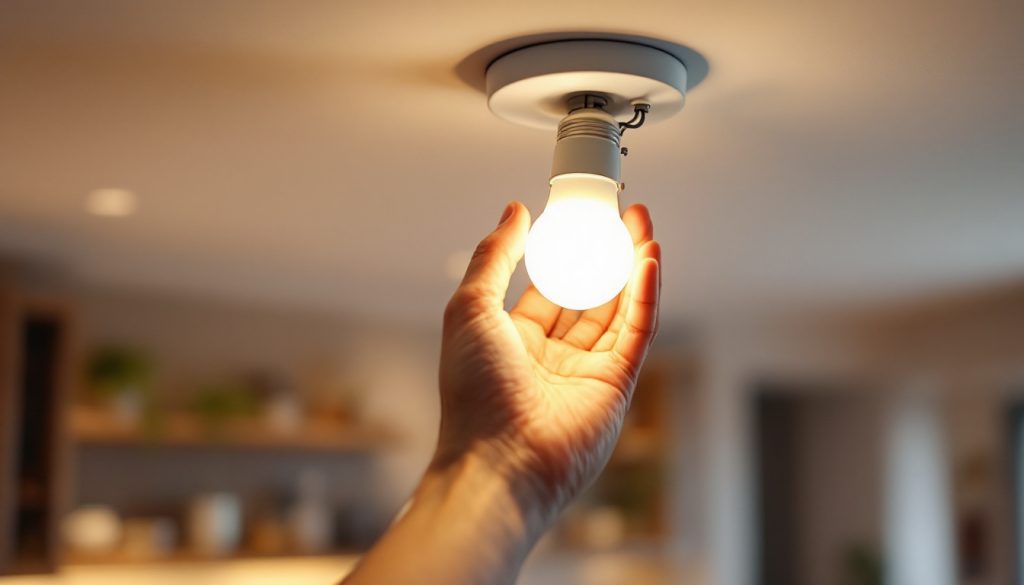
Homeowners across the San Gabriel Valley frequently ask about LED lighting upgrades and whether the savings justify the upfront investment. The answer depends on your current lighting setup, how many hours per day those lights run, and what you’re paying Southern California Edison for electricity. Martin’s Electrical & Lighting Company has served Los Angeles County since 1990, helping property owners in San Dimas, Glendora, La Verne, and Covina reduce their monthly electric bills through practical lighting retrofits. This article breaks down the actual dollar savings you can expect from switching to LED lighting, using real SCE electric rates and typical San Gabriel Valley home profiles. Whether you’re considering a whole-home retrofit or targeted upgrades in high-use areas, understanding the math behind LED savings helps you make an informed decision about your property’s lighting infrastructure.
The Real Cost of Traditional Lighting in Los Angeles County
Southern California Edison customers in the San Gabriel Valley pay tiered rates that increase as monthly usage climbs. As of 2026, residential baseline rates start around $0.36 per kilowatt-hour (kWh) and can exceed $0.50 per kWh once you cross into higher tiers during summer months. Many older homes in Covina, La Verne, and surrounding areas still operate with a mix of incandescent bulbs (60W to 100W), halogen recessed cans (65W to 90W each), and older compact fluorescent lamps (CFLs) that were installed during the early 2000s energy-efficiency push.
A single 60-watt incandescent bulb running five hours per day consumes 0.3 kWh daily, or roughly 110 kWh per year. At SCE’s average residential rate of $0.40 per kWh, that one bulb costs approximately $44 annually to operate. Multiply that across a typical San Gabriel Valley home with 40 to 60 light fixtures—including recessed lighting in living areas, ceiling fixtures in bedrooms, outdoor outdoor accent lighting, and garage door openers with integrated bulbs—and the annual lighting cost can easily reach $1,200 to $1,800 before accounting for air conditioning load increases from heat generated by inefficient bulbs.
Halogen bulbs pose an even larger expense. Many homes built or remodeled in the 1990s and early 2000s feature halogen recessed can lighting throughout kitchens, hallways, and bathrooms. These fixtures typically use 65W to 90W halogen bulbs, generating significant heat and driving up both electric bills and cooling costs during Los Angeles County’s long summer season. A single 75W halogen bulb operating five hours daily costs roughly $55 per year at current SCE rates—and a home with 20 recessed halogen fixtures can see annual lighting costs from those fixtures alone exceed $1,100.
Breaking Down LED Lighting Savings: The Math for LA Homeowners
LED bulbs deliver the same light output (measured in lumens) as incandescent and halogen bulbs while consuming 75% to 90% less electricity. A 60-watt-equivalent LED bulb typically draws 8 to 10 watts, and a 75-watt-equivalent LED recessed retrofit draws just 10 to 12 watts. This dramatic reduction in wattage translates directly to lower kilowatt-hour consumption on your SCE bill.
Consider a straightforward comparison for a home in Glendora replacing 40 incandescent bulbs (60W each) with LED equivalents (9W each). Each incandescent bulb operating five hours per day consumes 110 kWh annually and costs $44 per year at $0.40/kWh. The LED replacement consumes just 16 kWh per year, costing approximately $6.50 annually. That’s a savings of $37.50 per bulb per year. Across 40 bulbs, the annual savings total $1,500.
For halogen recessed lighting, the numbers become even more compelling. Replacing a 75W halogen bulb with a 12W LED recessed retrofit reduces annual consumption from 137 kWh to 22 kWh—a savings of 115 kWh per fixture per year. At SCE’s average rate, that’s $46 in annual savings per fixture. A home with 20 halogen recessed cans saves approximately $920 per year from that retrofit alone.
Most LED bulbs available today carry a 15,000 to 25,000-hour rated lifespan—10 to 15 years under typical residential use—compared to roughly 1,000 hours for incandescent bulbs. The combination of reduced energy consumption, nearly eliminated replacement frequency, and decreased heat load on air conditioning systems makes LED lighting upgrades one of the highest-return energy efficiency investments available to Los Angeles County homeowners.
Whole-Home LED Retrofits: Where San Gabriel Valley Homes Waste the Most
Certain areas of a typical San Gabriel Valley home consume disproportionate amounts of lighting energy. Identifying these high-impact zones allows property owners to prioritize retrofits that deliver the fastest payback.
Recessed can lighting in kitchens, living rooms, and hallways represents the largest single opportunity for most homes built before 2010. Many older recessed fixtures use halogen or incandescent bulbs that run for extended periods daily. A kitchen with eight recessed cans running three hours per day can waste over 600 kWh per year compared to LED retrofits. Martin’s Electrical & Lighting Company frequently encounters homes in La Verne and Covina where 15 to 25 recessed fixtures remain on halogen bulbs, costing homeowners $600 to $1,000 annually in unnecessary electric charges.
Outdoor and outdoor accent lighting often runs on timers or photocell sensors, operating six to ten hours per night. Many properties in San Dimas still use 50W to 75W halogen flood lights or older incandescent path lights. A single 65W halogen flood light operating eight hours nightly consumes 190 kWh per year, costing $76 at SCE rates. Replacing it with a 10W LED flood reduces annual cost to $12—a savings of $64 per fixture. Properties with six to ten outdoor fixtures can save $400 to $600 annually from outdoor lighting retrofits alone.
Ceiling fans with integrated light kits frequently use 60W candelabra-base incandescent bulbs. Many homeowners overlook these fixtures during retrofit projects, but a ceiling fan light operating four hours daily with four 60W bulbs costs over $140 per year to run. LED candelabra bulbs drawing 6W each reduce that cost to $21 annually, saving $120 per fan. Homes with four to six ceiling fans gain $480 to $720 in annual savings from this retrofit.
Garage lighting and workshop areas often rely on older fluorescent shop lights or incandescent bulbs. Switching to LED shop lights yields meaningful savings for property owners who use garage space as functional workspace. For residents managing ADU electrical requirements or planning accessory dwelling units, upgrading main-house lighting first helps establish baseline electric consumption and available capacity.
When You Need an Electrician vs. Simple Bulb Swaps
Many LED upgrades require nothing more than unscrewing an old bulb and installing an LED replacement. However, several scenarios necessitate professional electrical service to ensure safety, code compliance, and proper fixture performance.
Recessed can lighting retrofits often fall into this category. Older recessed cans may not be rated for LED retrofit kits, particularly if the housing lacks adequate ventilation or if the fixture is covered by insulation in the attic. California’s Title 24 energy code requires that recessed fixtures in insulated ceilings be IC-rated (insulation contact) and airtight. A licensed electrician can assess whether existing recessed cans meet current code, install proper retrofit kits, and verify that LED modules operate within safe temperature ranges. Improper LED installation in older recessed fixtures can cause premature LED failure or create fire hazards.
Dimmer compatibility represents another common hurdle. Standard incandescent dimmers use phase-control technology that works poorly with many LED bulbs, causing flickering, buzzing, or limited dimming range. Upgrading to LED-compatible dimmers requires replacing the dimmer switch—a straightforward task for a licensed electrician but one that involves working with live electrical wiring. Properties in Glendora and San Dimas with multiple dimmed lighting zones benefit from professional lighting installation service that matches LED bulbs to appropriate dimmer models and verifies smooth dimming performance across the full range.
Three-way and four-way switch circuits control lights from multiple locations—common in hallways, stairways, and master bedrooms. These circuits require specific LED bulb types and sometimes necessitate rewiring if existing switches are incompatible, and lights that flicker when controlled from only one switch location indicate wiring issues that require professional diagnosis.
Outdoor fixture conversions involve additional considerations. Low-voltage outdoor accent lighting systems (12V) use transformers that may not operate efficiently with LED loads or require minimum wattage that LED fixtures cannot meet. Licensed electricians can test transformer compatibility, replace transformers if needed, and ensure outdoor LED fixtures carry appropriate wet-location ratings for California use.
Properties evaluating major electrical upgrades—such as adding EV charger power usage capacity—should coordinate LED retrofits with those projects to minimize duplicate service calls.
LED Compatibility and Available Rebates for SGV Homeowners
Not all LED bulbs perform equally across different fixture types and electrical configurations. Dimmer requirements vary by LED bulb design—look for bulbs explicitly labeled “dimmable” and pair them with dimmers listed as LED-compatible, since standard incandescent dimmers often cause flickering or buzzing. Martin’s Electrical & Lighting Company recommends testing dimmer-and-bulb combinations in a single fixture before committing to whole-home upgrades.
Enclosed fixture ratings matter for LED bulbs installed in ceiling fixtures, recessed cans, or outdoor coach lights with closed globes. Not all LED bulbs are rated for enclosed-fixture use, and installing a non-rated LED in an enclosed fixture shortens bulb lifespan significantly—always verify that packaging specifies “suitable for enclosed fixtures.”
Color temperature, measured in Kelvin (K), affects comfort: warm white (2700K-3000K) emulates traditional incandescent light, neutral white (3500K-4000K) suits task lighting, and cool white (5000K-6500K) works for garages and workspaces. Color Rendering Index (CRI) above 80 ensures colors appear natural; investing in quality LEDs (CRI 90+) avoids the harsh, sterile look associated with cheap LED products.
Electrical panel capacity rarely limits LED retrofits—in fact, LED upgrades free up capacity. Before undertaking whole-home retrofits, homeowners concerned about overall capacity can perform a house amperage check to understand their panel’s available margin, which matters for properties considering future EV charger installation or kitchen remodels.
Southern California Edison’s direct LED rebate programs have largely phased out as the technology became standard, but Energy Upgrade California programs occasionally provide incentives for comprehensive home energy retrofits that include lighting. The Energy Savings Assistance Program (ESA) offers no-cost lighting upgrades to income-qualified SCE customers. Even without rebates, the payback period on LED retrofits—typically 12 to 24 months for high-use fixtures—makes these upgrades financially attractive on their own. Working with a qualified San Gabriel Valley electrician ensures retrofits meet code requirements and qualify for any available programs.
What to Expect: LED Lighting Installation Service in San Dimas and SGV
Professional LED lighting retrofit service typically begins with an on-site assessment. A licensed electrician evaluates existing fixtures, identifies compatibility issues, and recommends appropriate LED replacements. For whole-home retrofits, this assessment covers bulb counts, fixture types, dimmer locations, and any code compliance gaps.
Most residential LED retrofit projects in San Gabriel Valley complete within one to two days, with electricians verifying that all installations operate correctly, dimmers function smoothly, and outdoor fixtures are properly sealed against weather intrusion. Martin’s Electrical & Lighting Company provides documentation of work performed, including fixture locations, LED specifications, and estimated annual savings based on SCE rates—valuable for property sale disclosures and tracking return on investment.
For property owners in La Verne, Covina, Glendora, and throughout Los Angeles County ready to reduce monthly electric bills and improve lighting quality, professional LED retrofits deliver measurable savings from day one. Get a free estimate from Martin’s Electrical & Lighting Company to learn what LED retrofits can save on your specific property’s electric bill.