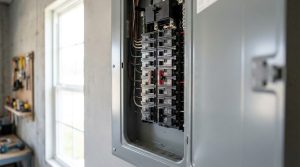
Your electrical panel is the heart of your home. It pumps electricity to every outlet, switch, and appliance you own.
If your home in Covina or Glendora was built before 1990, that heart is likely sized for a different era. The standard “100 Amp” panel was designed for a world without Central AC, Electric Vehicles, Pool Heaters, and Induction Cooktops.
Today, as we electrify our lives, the 100-amp service is hitting a wall. Here is why upgrading to 200 Amps is the standard for the modern home and what the process involves.
Understanding Amperage
Think of amperage like water pressure.
- 100 Amps: A garden hose. You can water the plants (run the lights), but if you try to fill a pool (charge a Tesla) while washing the car (running the AC), the pressure drops. The lights dim. The breaker trips.
- 200 Amps: A fire hose. You have massive capacity. You can run all high-demand appliances simultaneously without straining the system.
Signs You Are Maxed Out
How do you know you need an upgrade?
1. No Breaker Space: You open your panel door and every slot is full. You want to add a circuit for a hot tub, but there is physically nowhere to put the breaker. (Cheating with “tandem” or “skinny” breakers only works up to a point before the panel is overloaded).
2. The EV Dilemma: A Level 2 EV charger requires a dedicated 50 or 60-amp circuit. That one appliance uses 50% or 60% of a 100-amp panel’s total capacity. Most city inspectors will not approve an EV charger permit on a 100-amp service because the load calculation fails.
3. Dimming Lights: When the AC compressor kicks on, do your living room lights dip for a second? That is voltage drop caused by your main service struggling to supply the inrush current.
The 200 Amp Future
California is moving toward “electrification.” Gas furnaces are being replaced by electric heat pumps. Gas water heaters by electric hybrids. Gas cars by EVs.
A 100-amp panel physically cannot support an all-electric home. Upgrading to 200 amps future-proofs your property for the next 40 years. It increases resale value because buyers look for this—nobody wants to buy a house and immediately spend $4,000 on a new panel.
The Upgrade Process
Upgrading a main electrical panel is a major job involving the city, the utility (SCE), and a licensed electrician.
Step 1: Planning and Permits
We perform a load calculation to confirm 200 amps is sufficient (large estates may need 400 amps). We submit plans to your city building department for the permit.
Step 2: Utility Disconnect
On the day of work, Southern California Edison cuts power to your home from the street.
Step 3: The Swap
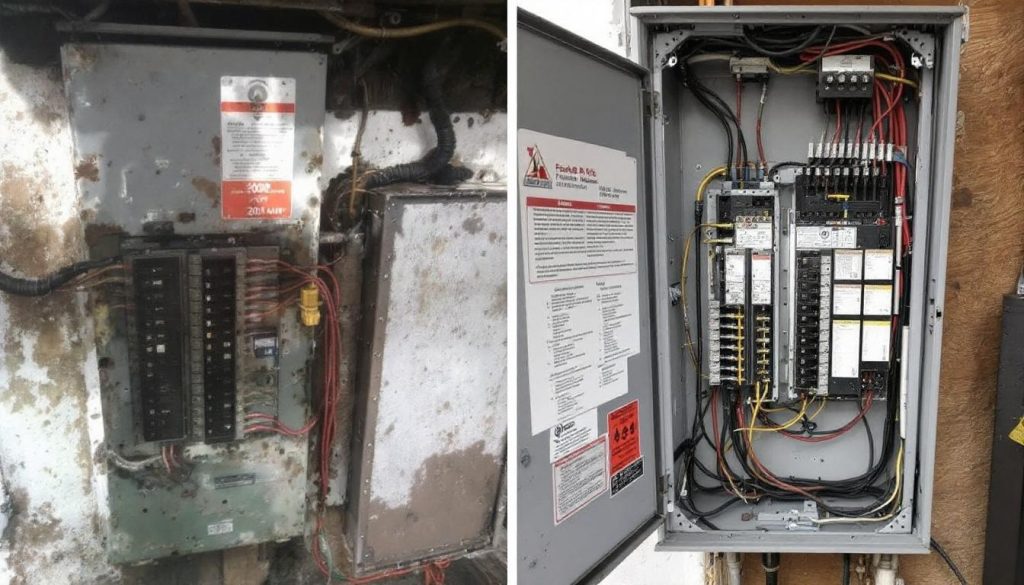
We remove the old box. Often, we have to upgrade the grounding system (driving two 8-foot copper rods into the earth) to meet current 2026 codes. We install the new panel, new breakers, and re-terminate all your house circuits.
- *Note on Stucco:* Removing the old panel usually damages the stucco around it. Martin’s Electrical handles the rough patch, but you may need a painter to finish the blend.
Step 4: Inspection and Reconnect
The city inspector verifies the work. Once signed off, Edison reconnects the power. The whole process usually leaves you without power for 6 to 8 hours.
Safety First
Old panels also carry latent risks. If you have a Zinsco or Federal Pacific panel, swapping it isn’t just about capacity—it’s about fire safety. Those brands are known to have breakers that fail to trip during a short circuit.
If you are planning a remodel, buying an EV, or just tired of tripping breakers, get your infrastructure right first. Contact Martin’s Electrical for a panel evaluation. We handle the paperwork, the permit, and the power.