Every time you take a hot shower, moisture-laden air fills your bathroom. Without proper ventilation, that moisture absorbs into drywall, grout, ceiling texture, and any organic material it touches. Within weeks, mold starts growing in corners, behind mirrors, and inside the ceiling above the shower. Within months, paint peels, caulk blackens, and structural wood begins deteriorating.
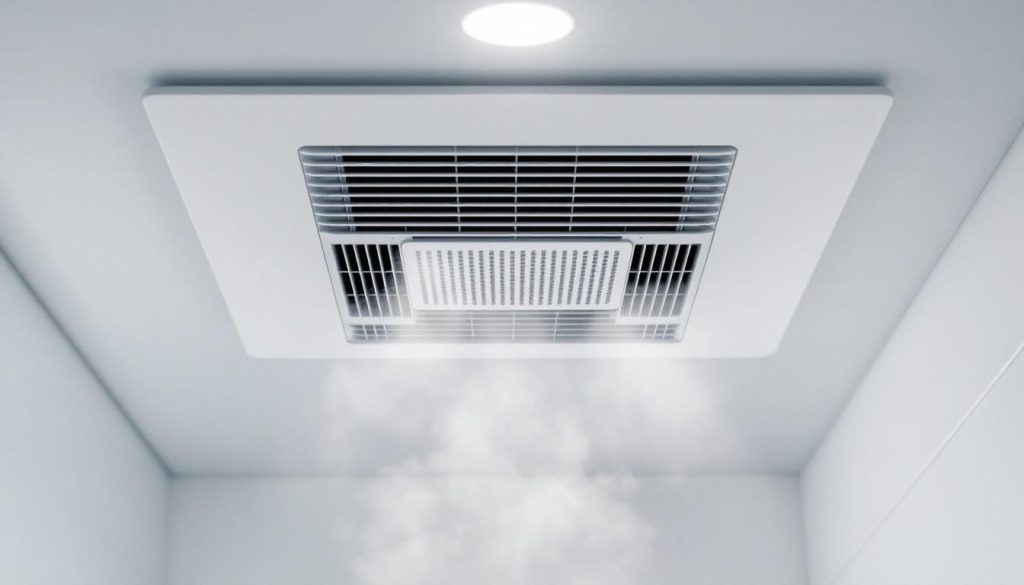
A properly installed bathroom exhaust fan removes that moisture before damage starts. It pulls humid air out of the bathroom and vents it outside through ductwork — not into the attic, not into the wall cavity, but outside the building envelope entirely.
Despite being a straightforward installation, exhaust fans are one of the most commonly neglected or improperly installed components in San Gabriel Valley homes. Many older homes have no exhaust fan at all (relying on windows that rarely get opened). Others have fans vented into the attic rather than outdoors — creating a hidden moisture problem above the ceiling that is worse than no fan at all.
Here is what proper bathroom exhaust fan installation involves, what it costs, and how to know whether your current fan is doing its job.
Why Exhaust Fans Are Required by Code
California building code requires mechanical ventilation in all bathrooms. If a bathroom has an operable window, it technically satisfies code for ventilation — but only if someone actually opens it. In practice, no one opens a bathroom window during a shower in January, and many bathrooms in San Gabriel Valley homes have small windows that provide insufficient air exchange even when opened.
Modern code requires exhaust fans rated for a minimum CFM (cubic feet per minute) based on bathroom size:
– Bathrooms up to 50 square feet: minimum 50 CFM
– Bathrooms over 50 square feet: 1 CFM per square foot of floor area
– Enclosed toilet rooms: 50 CFM minimum
– Combined tub/shower rooms without window: mechanical ventilation is mandatory regardless of other code paths
For any bathroom renovation, addition, or new construction, an adequately sized exhaust fan with proper exterior venting is required to pass inspection. If you are remodeling a bathroom and the existing ventilation is inadequate, bringing it to current code is part of the project scope.
Signs Your Current Fan Is Not Working Properly
Many homeowners have a bathroom fan that runs but does not actually ventilate effectively. Here are the indicators that your current setup is failing:
Persistent moisture on mirrors and walls after the fan runs for 15 minutes. A properly sized and vented fan should clear visible moisture within 10 to 15 minutes of running after a shower. If condensation lingers for 30+ minutes with the fan on, the fan is undersized, the ductwork is restricted, or the fan is not actually venting to the exterior.
Mold growth in corners, on grout, or on the ceiling. Recurring mold in a bathroom with a running fan means the fan is not removing moisture effectively. Either the CFM is too low, the duct run is too long and restrictive, or the vent termination is blocked.
The fan is excessively loud. Modern exhaust fans operate at 0.5 to 1.5 sones — quieter than a refrigerator. If your fan sounds like a jet engine, it is likely an older model with worn bearings that needs replacement. Homeowners avoid running loud fans, which defeats the purpose entirely.
You can feel no airflow when holding tissue near the fan grille. Turn the fan on and hold a single-ply tissue near the intake grille. It should be pulled toward the fan noticeably. If there is no measurable suction, the fan motor may have failed, the duct is disconnected or crushed, or the exterior vent is blocked.
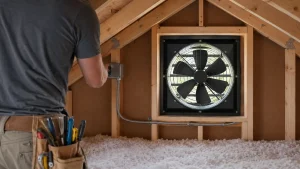
The fan vents into the attic. Look in your attic above the bathroom. If you see a flexible duct from the fan that simply terminates in open attic space (no connection to a roof cap or soffit vent), your fan is depositing all that bathroom moisture into your attic. This causes far more damage than no fan at all — attic mold, rotting roof sheathing, and saturated insulation.
What Proper Installation Includes
A correct bathroom exhaust fan installation involves more than just the fan unit. Every component matters for effective moisture removal.
Fan selection and sizing. Choose a fan rated for your bathroom’s square footage with additional capacity for long duct runs. A 80-100 CFM fan handles most standard bathrooms with duct runs under 10 feet. For larger bathrooms or longer duct runs, 110-150 CFM ensures adequate airflow despite friction losses in the ductwork.
Proper ductwork. Rigid or semi-rigid metal duct is strongly preferred over flexible vinyl duct. Flexible duct sags, creates low points where moisture collects, and offers significantly higher air resistance than rigid duct. Duct size should match the fan outlet — typically 4 inches for residential units. All joints should be sealed with foil tape (not standard cloth duct tape, which degrades).
Exterior termination. The duct must terminate at an exterior wall cap or roof cap with a damper that opens when the fan runs and closes when it stops (preventing backdrafts and pest entry). The termination must not be in a soffit (which allows moisture back into the attic) unless the vent extends fully through the soffit to open air.
Electrical connection. The fan connects to a dedicated switch or timer. Many homeowners prefer a combination fan/light unit controlled by a single switch or separate switches for each function. Timer switches that automatically run the fan for a set period after the bathroom is vacated are excellent for ensuring adequate moisture removal even when people forget to leave the fan running.
Insulation around ductwork in attic spaces. When ductwork passes through unconditioned attic space, warm moist air inside the duct can condense on the cold exterior surface. Insulating attic-run ductwork prevents this condensation from dripping onto ceiling drywall below.
Installation Costs in the San Gabriel Valley
Replacement fan (existing duct and wiring in place):
– Cost: $200 to $450 installed
– Timeline: 1 to 2 hours
– Includes: new fan unit, connection to existing wiring and duct, testing
New fan installation (no existing fan, ductwork needed):
– Cost: $400 to $900 installed
– Timeline: 3 to 5 hours
– Includes: ceiling cut, fan mounting, new duct run to exterior, exterior vent cap, electrical connection from nearest circuit, switch installation
Fan upgrade with extended duct reroute (fixing improper attic-dump installation):
– Cost: $350 to $700
– Timeline: 2 to 4 hours
– Includes: new exterior vent cap, rigid duct installation from fan to exterior, insulation wrapping on attic duct section, sealing the old attic termination
Adding a timer switch to existing fan:
– Cost: $100 to $200
– Includes: humidity-sensing timer switch or countdown timer that keeps the fan running after you leave the room
These costs reflect licensed electrician rates in the San Gabriel Valley. The electrical installation includes all materials, labor, and cleanup.
Choosing the Right Fan Features
Modern bathroom exhaust fans offer features well beyond basic air removal. Here are the options worth considering:
Humidity-sensing automatic operation. The fan detects humidity levels and turns on automatically when moisture rises above a set threshold. Eliminates the need to remember to turn the fan on — and more importantly, ensures the fan runs long enough to fully clear moisture.
LED light integration. Combination fan/light units eliminate the need for a separate ceiling light in the bathroom. Quality units provide 100+ watts equivalent of LED brightness with the fan in a single fixture.
Bluetooth speaker. Some premium fans include built-in Bluetooth speakers for music or podcasts in the shower. A luxury add-on, but surprisingly popular in bathroom remodels.
Heater integration. Combination fan/heater units provide radiant warmth for cold mornings — particularly appreciated in older SGV homes without bathroom heating.
Ultra-quiet operation (0.3-1.0 sone rating). Premium fans operate at noise levels barely distinguishable from silence. Worth the investment in master bathrooms and any bathroom adjacent to bedrooms where a loud fan would disturb sleep.
For most homeowners, a quality 100 CFM fan with LED light integration and humidity-sensing operation represents the best balance of function and value. Expect to pay $80 to $200 for the fan unit itself, plus installation labor.
When selecting a fan, pay attention to the sone rating above all other features. A fan that is too loud will not get used — and a fan that does not run cannot remove moisture. Ultra-quiet models (under 1.0 sone) cost $30 to $50 more than standard fans but earn that premium by actually being used consistently. The quietest models on the market operate at 0.3 sones, which is essentially inaudible from inside the bathroom. Your household will be far more likely to run the fan for the recommended duration after each shower if they cannot hear it operating.
For homes in the San Gabriel Valley built before 1990, existing bathroom fans are almost universally undersized by modern standards and operating with worn motors that have doubled or tripled their original noise output. Replacing a 30-year-old fan with a modern unit transforms the bathroom experience — dramatically quieter operation with significantly more effective moisture removal.
Take Action Before Damage Occurs
Bathroom moisture damage is entirely preventable with proper ventilation. If your bathroom lacks a fan, has a fan that vents into the attic, or has a fan that barely moves air, addressing this now costs a few hundred dollars. Ignoring it until mold remediation is needed costs thousands.
Start with a simple check: run your bathroom fan for 15 minutes after a shower. If moisture remains on mirrors and walls afterward, your ventilation is inadequate. If you are unsure whether your fan vents properly to the exterior, a quick attic inspection reveals the answer immediately.
Request a free estimate for bathroom exhaust fan installation or replacement. We will assess your current ventilation, recommend the right fan size for your bathroom, and install it with proper ductwork that actually moves moisture out of your home.