Driving an Electric Vehicle in the San Gabriel Valley is a dream—until you try to plug it in at your 1960s Glendora ranch home.
Most homes built before 1990 were not designed for the massive electrical load of an EV. A Level 2 charger draws 40, 50, or even 60 amps continuously. That is equivalent to running an electric oven at full blast for 8 hours straight, every single night.
Installing an EV charger in an older home isn’t just about bolting a box to the wall. It is an infrastructure project. Here are the specific challenges you will face and the code-compliant solutions Martin’s Electrical uses to get you charged safely.
Challenge 1: The 100-Amp Panel Limit
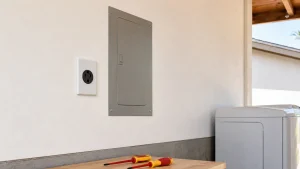
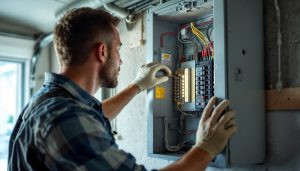
The biggest hurdle is your Main Service Panel.
Most older SGV homes have a 100-amp or 125-amp main panel.
- The Math: If your AC uses 30 amps, your electric dryer uses 30 amps, your oven uses 40 amps, and your lights/plugs calculate to another 30 amps… your “Load Calculation” is already near the limit.
- The Problem: Adding specific 50-amp EV breaker pushes you over the top. The city will not approve the permit because you are technically overloading the main service potential.
Solution A: Service Upgrade (The “Heavy Up”)
We replace your 100-amp panel with a new 200-amp service. This involves coordinating with Southern California Edison (SCE) to pull new, thicker feeder wires from the street. It completely solves the capacity issue and adds value to the home.
Solution B: Load Management Device (The “DCC-12”)
If a panel upgrade is too expensive or impossible (e.g., in a condo), we install a Load Management System like the DCC-12.
- *How it works:* It sits between your panel and the EV charger. It monitors your home’s total power usage in real-time. If you turn on the AC and the oven and the usage gets too high, it automatically cuts power to the EV charger temporarily. When the load drops, it turns the charger back on.
- *Result:* You get Level 2 charging on a 100-amp panel without an expensive service upgrade.
Challenge 2: Lack of Grounding
We often find ungrounded outlets in garages of homes built before 1974. EV chargers require a solid equipment ground for safety. If your garage wiring is ungrounded (2-wire), the charger will fault out and refuse to charge.
Solution: New Dedicated Circuit
We almost always run a brand new, dedicated circuit from the main panel to the charger location using 6-gauge or 4-gauge copper wire (depending on distance). We prefer to run this in hard conduit (EMT) for physical protection in the garage environment. This ensures a dedicated ground path back to the main panel’s grounding rod.
Challenge 3: Detached Garages
Many craftsman homes in Pasadena and Monrovia have detached garages located 50+ feet from the main house panel.
- The Issue: Running a new high-voltage line that far creates “Voltage Drop.” If we use standard wire, the voltage might drop from 240V to 230V, causing the charger to overheat or slow down.
Solution: Trenching
We trench across the yard (18 inches deep) and install PVC conduit with upsized conductors (often #4 or #2 copper) to compensate for the distance. We often recommend installing a Sub-Panel in the garage. This gives you the EV circuit *plus* extra room for workshop tools or future upgrades without digging up the yard again.
Challenge 4: The Plug vs. Hardwire Debate
In older homes, outlets can be worn out.
- NEMA 14-50: The “dryer plug” standard. Flexible, but standard $10 receptacles from Home Depot can melt under EV loads. We ONLY install industrial-grade Hubbell or Bryant receptacles.
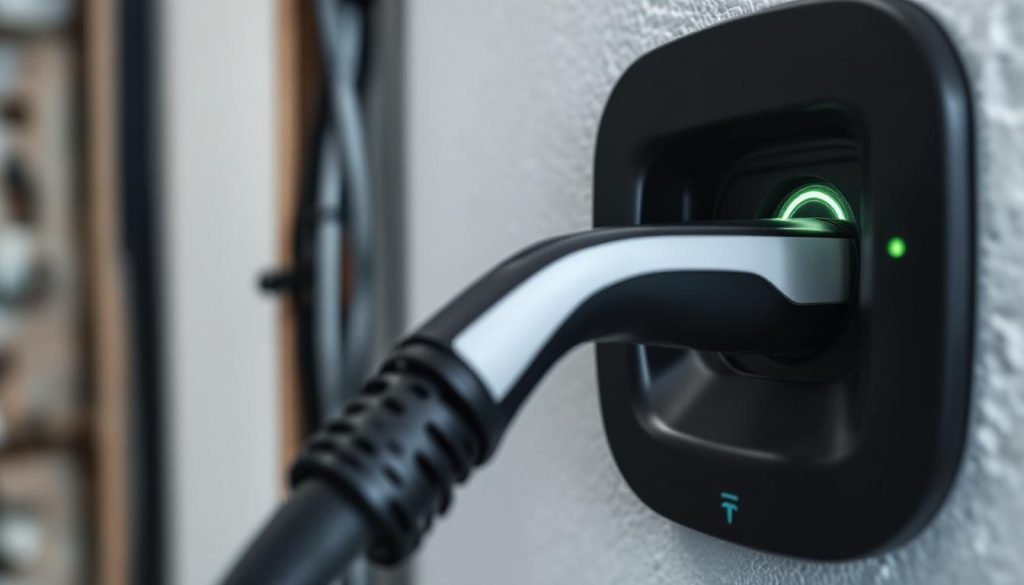
- Hardwire: Bolting the unit (Tesla Wall Connector / ChargePoint) directly to the wall is safer for older homes. It eliminates the plug connection point—one less place for resistance and heat to build up.
Get Charged Safely
Don’t trust your $60,000 EV (and your house) to a handyman installation. EV charging is the most demanding load your home will ever see.
Martin’s Electrical is a certified installer for Tesla, Qmerit, and other major brands. We can perform specific load calculations on your older home and tell you exactly what is needed to charge fast and sleep soundly.