A dead outlet is one of the most common electrical issues in any home. You plug in a lamp or charger, nothing happens, and you are left wondering whether this is a simple fix or a sign of something more serious. The answer depends on what is causing the failure — and several possibilities range from a two-second fix to a condition that requires a licensed electrician.
Before calling for service, there are safe diagnostic steps any homeowner can take to identify the likely cause. Some dead outlets have solutions you can resolve in under a minute without any tools. Others indicate wiring problems that should not be touched by anyone without proper training and licensing.
This guide walks through the most common reasons outlets stop working, what you can safely check yourself, and when the problem requires professional electrical repair.
Check 1: Is a GFCI Outlet Tripped Somewhere?
This is the most common cause of dead outlets and the easiest to fix. GFCI (Ground Fault Circuit Interrupter) outlets protect against electrical shock — and a single GFCI outlet often protects multiple downstream outlets on the same circuit.
When a GFCI trips, every outlet wired downstream from it loses power. The tripped GFCI might not be in the same room as the dead outlet. Common GFCI locations that control outlets in other areas:
– A kitchen GFCI that also feeds the dining room outlet
– A garage GFCI that also protects outdoor outlets
– A bathroom GFCI that feeds an adjacent hallway outlet
– A GFCI in a utility room that protects basement or laundry outlets
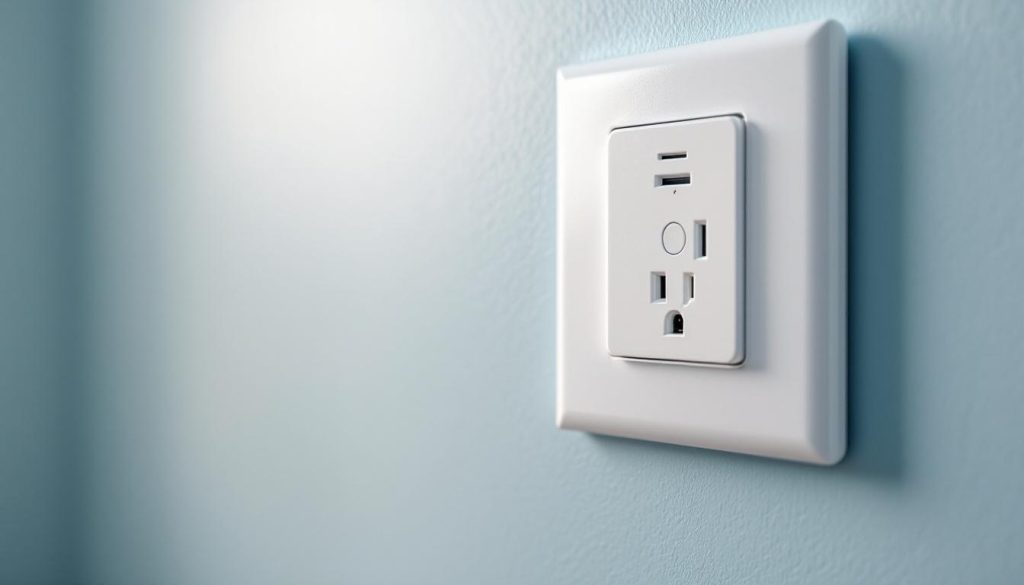
What to do: Walk through your home and find every GFCI outlet (the ones with Test and Reset buttons). Press the Reset button firmly on each one. If you find a tripped GFCI that resets with a click, check your dead outlet again — it may now have power restored.
If a GFCI will not reset (you press Reset and it immediately trips back), there is likely a ground fault somewhere on that circuit that is causing the trip. Unplug everything on that circuit and try again. If it still will not reset, the GFCI itself may have failed or there is a wiring fault that needs professional diagnosis.
Check 2: Has the Circuit Breaker Tripped?
The second most common cause is a tripped breaker in your electrical panel. Breakers trip when circuits are overloaded or when a fault occurs.
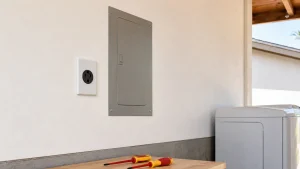
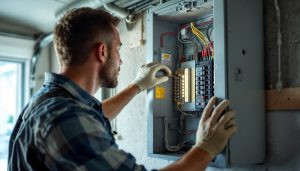
How to check: Open your electrical panel door (the metal box where all your breakers live, usually in the garage or a utility area). Look for any breaker that is in the middle position — not fully ON and not fully OFF, but slightly between. This is the tripped position.
How to reset: Push the tripped breaker firmly to the full OFF position first, then back to ON. You should feel it click into the ON position solidly. Check your outlet again.
If the breaker trips again immediately after resetting: Do not keep resetting it. A breaker that trips instantly indicates a short circuit or ground fault on that circuit. Something is wrong with the wiring or a device on that circuit, and forcing the breaker on repeatedly can cause damage or fire. This requires an electrician.
If the breaker trips again under load: If it resets fine but trips when you plug things in and use them, the circuit is overloaded. Too many devices drawing power on a single circuit exceeds its 15 or 20-amp capacity. The solution may be redistributing loads across circuits or having an electrician add a dedicated circuit for high-draw devices.
Check 3: Is the Outlet Controlled by a Switch?
Many homes — especially those built in the 1970s through 1990s — have outlets that are wired to a wall switch. This was common practice for rooms without built-in ceiling lights. The switch controls one or both halves of a duplex outlet so a floor lamp can be turned on and off from the doorway.
How to identify: Look for a light switch in the room that does not seem to control any light fixture. Flip it and check whether your dead outlet now has power. Also check whether only the top or bottom half of the outlet is dead — switched outlets often have one half switched and one half always-on.
This is not a fault or problem — it is intentional wiring that simply requires you to know which switch controls which outlet. If you have recently moved into a San Gabriel Valley home, label your switches to avoid this confusion going forward.
Check 4: Test with a Different Device
Before assuming the outlet is dead, verify that the device you are trying to use actually works. Plug a different device into the suspect outlet — a phone charger with an indicator light or a small lamp you know works.
If the test device works in the outlet, your original device has a problem — not the outlet. If nothing works in the outlet but other outlets on the same wall or room function fine, the problem is isolated to that specific outlet.
Also try both the top and bottom receptacle slots. Duplex outlets have two independent connection points. One half can fail while the other continues working if a wire has come loose on one set of terminals.
Check 5: Look for Visible Damage
With the device unplugged, examine the outlet visually:
– Burn marks or discoloration around the outlet plate indicate overheating that has damaged the outlet internally. Stop using this outlet immediately and schedule a repair.
– Melted or warped plastic on the outlet face means the outlet has overheated under load and the internal components are likely compromised.
– Loose outlet that moves in the box when you insert a plug suggests the mounting screws are loose or the box itself is not properly secured. While this alone does not cause power loss, it indicates poor connection quality.
– Cracked outlet face can allow dust and debris inside the outlet body, potentially causing shorts or poor connections.
Any visible damage means the outlet needs replacement. This is a $100-$175 repair by a licensed electrician and should not be deferred. Continuing to use a damaged outlet risks arcing, overheating, and fire.
When to Call an Electrician
You have checked the GFCI, verified the breaker, confirmed no switch controls the outlet, tested with a known-working device, and found no visible damage — but the outlet is still dead. At this point, the problem is inside the wall and requires professional diagnosis.
Common causes that need an electrician:
– Loose wire connection at the outlet terminals (wires work free from backstab connections over time — extremely common in homes built between 1970 and 2000 that used push-in backstab wiring rather than screw terminals)
– Broken wire inside the wall (less common but possible in older homes with brittle wiring insulation)
– Failed outlet internally (the spring contacts inside the receptacle wear out after decades of use)
– Daisy-chain break (outlets wired in series, where a loose connection at one outlet kills all downstream outlets)
– Rodent damage to wiring in wall or attic space
These are not homeowner-serviceable problems. Working inside an outlet box with live wiring present requires knowledge of proper procedures and carries electrocution risk. A licensed electrician diagnoses the specific failure, makes the repair safely, and verifies the circuit functions properly after the fix.
Typical repair costs:
– Single outlet replacement (loose connection or failed outlet): $100 to $175
– Diagnosing and repairing a daisy-chain break: $150 to $300
– Replacing a section of damaged wiring: $200 to $500 depending on access
If your home has multiple outlets failing or if you notice the issue spreading to additional outlets over time, this may indicate a more systemic wiring problem. Our blog post on warning signs your home needs rewiring covers the broader indicators that an isolated outlet failure is part of a larger pattern.
Multiple Dead Outlets: A Different Situation
When several outlets in different rooms stop working simultaneously, the diagnostic approach changes. Multiple dead outlets usually point to a circuit-level issue rather than an individual outlet failure.
Common causes of multiple outlets failing at once:
– A single GFCI outlet that protects a long daisy chain of downstream outlets in multiple rooms has tripped
– A breaker serving multiple rooms has tripped due to total load exceeding capacity
– A junction box in the attic or crawlspace has a loose connection affecting everything downstream
– The neutral wire on a shared circuit has disconnected at the panel (this is a more serious condition that can also cause over-voltage on remaining circuits)
If more than two outlets in different rooms stop working at the same time and neither GFCI resets nor breaker resets resolve the issue, call an electrician before troubleshooting further. A lost neutral condition in particular can damage sensitive electronics on the affected circuits and warrants prompt professional attention.
Older homes in Glendora, Covina, and other San Gabriel Valley communities built in the 1960s and 1970s commonly have circuits that serve many more outlets than modern code allows. A single 15-amp circuit might feed eight to ten outlets across multiple rooms — meaning one connection failure anywhere in that chain kills power to many locations simultaneously.
Prevent Future Outlet Failures
A few practices reduce the likelihood of outlet problems:
– Avoid overloading outlets with multiple high-draw devices through power strips (space heaters, hair dryers, and microwaves should each have their own dedicated outlet)
– Replace outlets that feel loose when plugging in devices — worn spring contacts do not grip plugs firmly and create resistance that generates heat
– If your home was built in the 1970s-1990s and uses backstab wiring connections, consider having outlets gradually replaced with screw-terminal connections during other electrical service visits (backstab connections are the single most common failure mode for residential outlets)
– Test GFCI outlets monthly by pressing the Test button to verify the mechanism still functions
For persistent outlet issues or any situation where you are uncertain whether the problem is safe to investigate further, contact us for service. We diagnose and repair outlet failures throughout the San Gabriel Valley, typically same-day or next-day for straightforward repairs.