Knob and tube wiring was the standard residential electrical installation method from the 1880s through the early 1950s. If your San Gabriel Valley home was built before 1950 — and there are thousands in Glendora, San Dimas, Monrovia, Pasadena, and surrounding communities that qualify — there is a real possibility that some or all of your home’s original wiring uses this system.
Knob and tube is not inherently dangerous in its original condition. It was engineered competently for the electrical demands of its era. The problems arise because those demands were a fraction of what modern households require, because decades of modifications have compromised the original installation, and because insulation added to attics after installation creates overheating conditions the system was never designed to handle.
Here is what knob and tube wiring is, how to identify it in your home, what risks it creates, and what your remediation options cost in 2026.
What Knob and Tube Wiring Looks Like
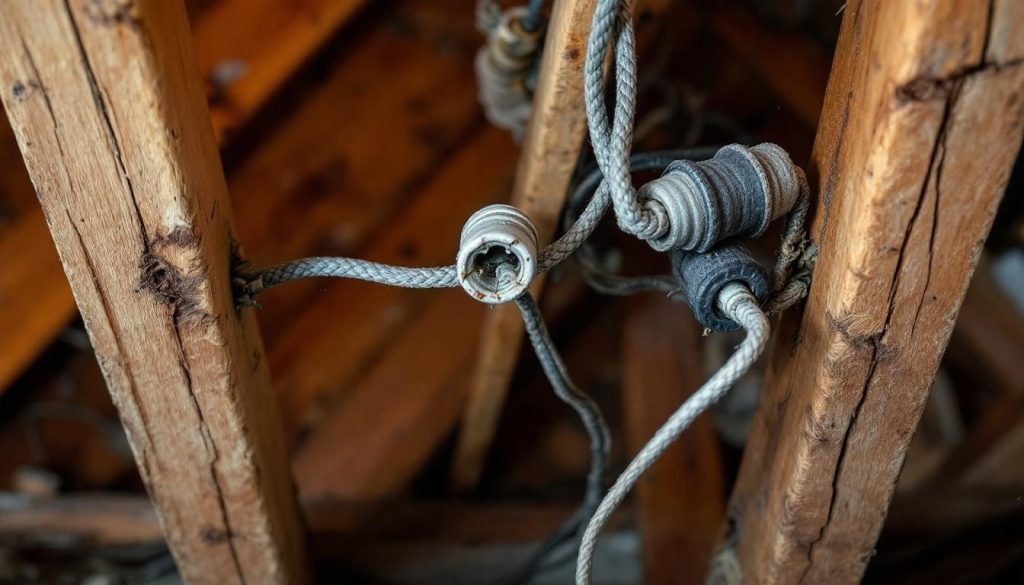
Knob and tube wiring is visually distinctive once you know what to look for. If you have access to your attic, basement, or crawlspace, you can often identify it without opening any walls.
Identifying features:
– Individual black (hot) and white (neutral) wires run separately rather than bundled in a cable
– Ceramic knobs (cylindrical insulators) mounted to framing members support the wires and keep them away from wood
– Ceramic tubes (hollow cylinders) pass wires through holes drilled in framing members
– Wires are coated in rubber insulation with a cloth fabric outer layer (rather than modern plastic/PVC insulation)
– No ground wire exists anywhere in the system (only hot and neutral)
– Connections between wires are soldered and wrapped in cloth tape (no wire nuts or modern connectors)
Where to look:
– Attic spaces (most visible because wires run exposed across joists)
– Basement or crawlspace ceilings
– Behind pulled outlets or switches (visible when the cover plate is removed and you look inside the box)
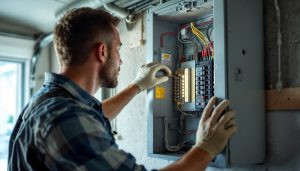
– Inside the electrical panel (knob and tube circuits enter the panel as individual conductors rather than modern cable)
Important distinction: Many SGV homes have a mix of original knob and tube in some areas and newer wiring in others. Additions, kitchen remodels, and previous partial upgrades may have replaced wiring in some rooms while leaving original wiring intact elsewhere. A full assessment identifies exactly where knob and tube exists throughout your home.
Why Knob and Tube Becomes Dangerous Over Time
The system itself was well-engineered for 1920s electrical loads. The dangers come from age, modification, and incompatibility with modern use:
Insulation deterioration. Rubber insulation becomes brittle after 70+ years. It cracks, flakes, and falls away from the copper conductor — leaving bare wire exposed inside walls, attics, and anywhere the wiring runs. Bare conductors resting against wood framing create fire risk.
Overloading. Knob and tube circuits were designed for lighting and a few small appliances. Each circuit typically supports only 15 amps shared across multiple rooms. Modern households drawing power for computers, entertainment systems, kitchen appliances, and HVAC on these same circuits push them far beyond their design capacity. Overloaded circuits generate heat — and knob and tube dissipates heat by being exposed to air, which leads to the next problem.
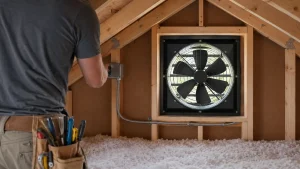
Insulation contact. Knob and tube wiring was designed to be surrounded by air for cooling. When homeowners or contractors add blown-in attic insulation for energy efficiency, that insulation buries the wiring and traps heat that would normally dissipate. This is one of the most common causes of knob-and-tube-related fires — well-intentioned energy upgrades that create dangerous conditions for wiring that was never meant to be buried.
Improper modifications. Over seven or eight decades, various electricians and homeowners have spliced into knob and tube circuits using methods ranging from acceptable to horrifying. Junction boxes buried in walls, wire nuts connecting old cloth-covered wire to modern Romex without proper support, and circuits extended far beyond their original load capacity are common findings during inspections.
No ground protection. Every outlet on a knob and tube circuit is ungrounded. This means no surge protector connected to these circuits actually functions (surge protectors require a ground path), and any metal-cased appliance becomes a shock hazard if an internal fault occurs.
Insurance and Real Estate Implications
Insurance companies have become increasingly strict about knob and tube wiring. If your home has active knob and tube circuits, you may face one or more of these situations:
Coverage denial. Some insurance carriers refuse to write new policies for homes with active knob and tube wiring. If you are purchasing a home with knob and tube, your lender may require proof of insurance before closing — creating a catch-22 where you cannot insure the home until the wiring is replaced, and cannot close the purchase until it is insured.
Higher premiums. Carriers that do cover homes with knob and tube often charge significantly higher premiums — typically 20 to 50 percent above comparable homes with modern wiring. Over several years, these premium increases can approach the cost of remediation itself.
Disclosure requirements. In California, sellers must disclose known knob and tube wiring on the Transfer Disclosure Statement. This disclosure frequently triggers buyer requests for remediation credits or price reductions during real estate transactions.
If you are planning to sell a home with knob and tube, addressing it before listing eliminates a common negotiation issue that costs sellers $5,000 to $15,000 in buyer credits — often more than the cost of simply handling the rewiring proactively.
Remediation Options and Costs
You have three primary approaches to addressing knob and tube wiring, ranging from least to most comprehensive:
Option 1: Targeted removal (most common and cost-effective).
– Remove knob and tube only in areas where it creates immediate risk — primarily where insulation buries the wiring and where circuits are overloaded
– Replace with modern Romex wiring in those specific areas
– Leave de-energized knob and tube in place (abandoned wiring that carries no current)
– Cost: $3,000 to $8,000 for a typical SGV home depending on scope
– Timeline: 2 to 5 days
– Insurance impact: most carriers accept targeted removal with written certification
Option 2: Full removal and replacement.
– Remove all knob and tube wiring throughout the home and replace with modern wiring
– New electrical panel with modern breakers (the old panel cannot support new circuit count)
– Grounded outlets throughout, AFCI and GFCI protection where required
– Cost: $12,000 to $25,000 depending on home size and accessibility
– Timeline: 1 to 3 weeks
– Insurance impact: fully resolves all concerns permanently
Option 3: Insurance-required minimum remediation.
– Meet the specific requirements your insurance carrier has documented (varies by carrier)
– Often involves removing insulation from around active knob and tube circuits and having an electrician certify the system’s condition
– Cost: $1,500 to $4,000
– Timeline: 1 to 3 days
– Insurance impact: satisfies the specific carrier’s requirement but does not eliminate the underlying age-related concerns
For most San Gabriel Valley homeowners, Option 1 (targeted removal) provides the best balance of safety improvement, insurance compliance, and cost management. It addresses the highest-risk conditions while keeping the project scope and budget manageable.
What to Do Next
If you suspect your home has knob and tube wiring — or if you have been told it does by an inspector, insurance agent, or previous electrician — the first step is a professional assessment that documents exactly where active knob and tube exists, its current condition, and which circuits are affected.
This assessment gives you a clear picture of your exposure and allows you to make informed decisions about timing and scope. Some homeowners address everything at once. Others plan a phased approach that handles the highest-risk areas first and schedules remaining work over one to two years.
What the Assessment Process Looks Like
A professional knob and tube assessment is a systematic evaluation of your home’s wiring infrastructure. It differs from a basic home inspection in depth and scope.
What the electrician examines:
– Attic spaces where knob and tube wiring is typically most visible and accessible
– Crawlspace or basement ceiling areas for visible wiring runs
– Representative outlet and switch boxes throughout the home (removing covers to identify wire type)
– The electrical panel interior to identify which circuits use knob and tube conductors
– Locations where insulation contacts or buries wiring
– Previous modifications, splices, and junction boxes for code compliance
– Overall circuit loading relative to the wiring capacity
What you receive after assessment:
– Written documentation of where active knob and tube exists in your home
– Identification of highest-risk conditions (insulation contact, deteriorated insulation, overloaded circuits)
– Prioritized remediation recommendations (what to address immediately vs. what can wait)
– Cost estimate for your chosen remediation scope
– Information to share with your insurance carrier if they have requested documentation
The assessment typically takes one to two hours for a standard single-family home. It requires attic access and the ability to open representative outlet boxes. The electrician does not need to open walls during assessment — accessible areas provide sufficient information to determine the scope of knob and tube throughout the home.
For homes where the assessment reveals only small isolated sections of knob and tube (perhaps only in one addition or one floor), targeted remediation keeps costs very manageable while fully resolving the identified concern.
Request a free estimate for a knob and tube assessment and remediation quote. We have rewired hundreds of pre-1950 homes across the San Gabriel Valley and can give you an accurate scope and price within a single visit.