Electrical grounding home safety systems protect families throughout the San Gabriel Valley from shock hazards and electrical fires every day. Many homeowners in San Dimas, Glendora, La Verne, and Covina live in older homes built before modern grounding standards became mandatory, leaving their electrical systems vulnerable to dangerous faults. Understanding how electrical grounding home systems work—and why bonding matters just as much—helps homeowners make informed decisions about protecting their property and loved ones. This guide explains what grounding and bonding do, how to identify potential problems in your home, what the National Electrical Code requires, and what it costs to bring an older electrical system up to current safety standards.
What Is Electrical Grounding?
Electrical grounding creates a safe pathway for fault current to travel directly into the earth instead of through a person’s body or causing a fire. Every electrical system carries current through hot and neutral wires during normal operation, but when something goes wrong—a frayed wire touches a metal appliance case, insulation breaks down inside a wall, or a surge enters the system—that fault current needs somewhere to go.
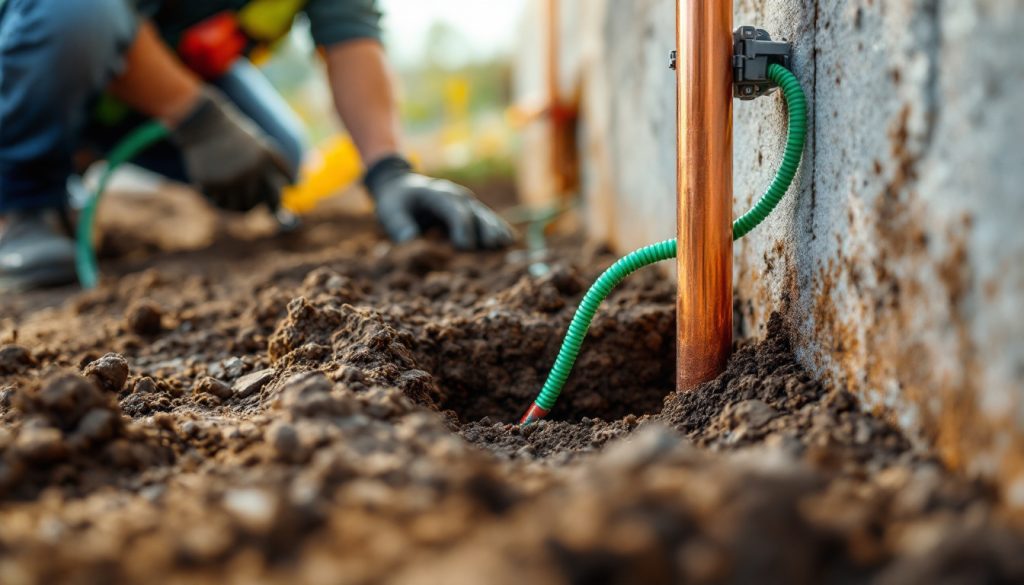
The electrical ground wire provides that path. In a properly grounded system, the ground wire connects every metal component of your electrical system: outlet boxes, switch plates, appliance frames, light fixtures, and the panel itself. All these connections run back to your main electrical panel, where they connect to the grounding electrode system—typically a ground rod driven eight feet into the earth or a connection to your home’s metal water supply pipe.
When a fault occurs in a grounded system, electricity takes the path of least resistance through the ground wire into the earth, tripping the circuit breaker almost instantly. This protects people from electrical shock and prevents electrical fires from starting in your walls. Without grounding, that same fault current stays energized on metal surfaces, waiting for someone to provide a path to ground by touching it.
Most homes built before the 1960s lack proper grounding because building codes didn’t require it. These older homes typically have two-prong outlets with no grounding connection, leaving residents vulnerable every time they plug in a modern appliance designed to rely on that ground connection for safety.
What Is Bonding and How Does It Differ from Grounding?
Bonding connects all metal components in your home’s electrical system together so they maintain the same electrical potential. While grounding provides a path to earth, bonding ensures that all conductive metal parts—whether they carry electricity or not—are electrically connected to prevent dangerous voltage differences between them.
The distinction matters because electricity always seeks to equalize potential differences. If your electrical panel is grounded but the metal water pipes in your bathroom aren’t bonded to that ground, a fault condition could create a voltage difference between them. Touch both simultaneously and your body becomes the path that equalizes that difference.
Proper bonding connects metal water pipes, gas lines, structural steel, HVAC ducts, and other metallic systems to your electrical system’s grounding network. This creates what the National Electrical Code calls an “effective ground-fault current path.” For example, older homes often have metal water supply pipes that provide an excellent ground connection where they enter the building. But if those pipes transition to plastic PEX piping inside the home without proper bonding jumpers, metal fixtures in different rooms may no longer share a common ground reference.
Many homeowners focus solely on grounding when upgrading their electrical systems, but bonding is equally critical. The two systems work together: bonding creates electrical continuity between all metal components, while grounding connects that entire bonded network to earth. You need both for complete electrical shock protection.
How to Tell If Your San Gabriel Valley Home Is Properly Grounded
Several visible indicators reveal whether your home has adequate grounding, though a professional inspection provides the only definitive answer. Start by examining your outlets throughout the house. Two-prong outlets indicate no grounding connection exists at that location, which is common in San Gabriel Valley homes built before 1962. Three-prong outlets suggest grounding may be present, but previous homeowners sometimes install three-prong outlets without actually connecting the ground wire—a dangerous practice that creates false security.
Open your main electrical panel (with the cover removed by a licensed electrician) and look for a thick copper or aluminum wire connecting to a ground bar. This grounding electrode conductor should run to either a ground rod outside or to your metal water service pipe. Check your main water service entry point for a copper grounding wire clamped to the metal water pipe. If your water service is plastic throughout, your home relies entirely on ground rods.
Testing outlets requires a receptacle tester, available at any hardware store for under ten dollars. This simple device plugs into three-prong outlets and uses light patterns to indicate correct wiring, open grounds, and other faults. However, receptacle testers cannot detect bootleg grounds or verify ground wire effectiveness.
Martin’s Electrical provides comprehensive grounding assessments throughout the San Gabriel Valley using specialized testing equipment that measures actual ground resistance. Many electrical problems in older homes stem from inadequate or deteriorated grounding systems that appear functional on the surface.
The Dangers of Improper Grounding in Your Home
Homes without proper electrical grounding face four primary dangers. Electrical shock represents the most immediate threat, particularly with modern appliances that rely on grounding for safety. When a hot wire contacts the metal frame of an ungrounded appliance, that entire appliance becomes energized at full voltage. Anyone touching it while simultaneously contacting a grounded surface—the floor, a faucet, another appliance—completes the circuit and receives a potentially fatal shock.
Fire risk increases substantially without grounding because fault currents may arc continuously without tripping protective devices. These arcs generate extreme heat inside walls, junction boxes, and appliances, igniting surrounding materials.
Surge damage destroys electronics in ungrounded homes because lightning strikes and utility surges have no direct path to earth. A single lightning strike to utility lines can destroy every computer, television, and appliance in an ungrounded home even when surge protectors are installed—because those surge protectors dump excess voltage onto the ground wire that doesn’t exist.
Appliance damage occurs gradually as ground faults degrade equipment without anyone realizing a problem exists. Refrigerators, washing machines, and HVAC systems with internal ground faults may function normally for months while slowly electrifying their metal cabinets. This shortened lifespan and premature failure often goes unrecognized as a grounding issue.
Ungrounded outlets in older homes create liability issues when selling property because home inspectors flag them as safety defects requiring correction.
NEC Grounding Requirements for Residential Systems
The National Electrical Code establishes minimum grounding requirements that all residential electrical installations must meet. These standards apply to new construction, additions, and upgrades, though existing installations may be grandfathered under older code versions until substantial modifications occur.
All residential electrical systems must connect to grounding electrodes that provide effective earth contact. The NEC specifies several acceptable grounding electrodes: metal underground water pipe in direct contact with earth for at least ten feet, concrete-encased electrodes (typically rebar in foundation concrete), ground rings circling the building, ground rods driven at least eight feet deep, and metal underground structural members. When a metal water pipe is available, the code requires it as the primary grounding electrode but also mandates supplemental electrodes like ground rods.
Every grounded outlet must have an equipment grounding conductor running back to the main panel. This ground wire must be sized appropriately: 14-gauge for 15-amp circuits, 12-gauge for 20-amp circuits. The NEC prohibits using the neutral wire for grounding purposes—a practice called a bootleg ground that provides no actual ground-fault protection.
All metal boxes, enclosures, and fittings containing electrical wiring must be grounded.
Panel services must separate grounds and neutrals at all locations except the main service panel. Sub-panels require four-wire feeds with grounds and neutrals on separate bus bars.
The Cost of Adding Grounding to an Older Home in SGV
Retrofitting grounding into an existing home varies widely in cost based on accessibility, home size, and the scope of work required. San Gabriel Valley homeowners typically encounter three scenarios, each with different price points.
Superficial upgrades replacing two-prong outlets with GFCI outlets at ungrounded locations run between $150 and $300 per outlet. This approach provides shock protection at the outlet itself but does not ground the circuit.
Partial grounding focuses on specific rooms or circuits where grounding is most critical—kitchens, bathrooms, laundry areas, and home offices. Partial grounding projects typically range from $2,500 to $8,000 depending on how many circuits require new ground wires and wall accessibility.
Whole-home grounding through complete rewiring provides the most thorough solution but carries the highest cost. Full rewiring removes old wiring, installs new copper wire with proper grounding throughout, and brings the entire electrical system up to current NEC standards. Whole-home rewiring typically runs from $8,000 to $20,000 for average-sized homes.
Ground rod installation for homes lacking adequate grounding electrodes adds $300 to $800 depending on soil conditions and accessibility.
Why GFCI Outlets Are Not a Substitute for Proper Grounding
Ground Fault Circuit Interrupter outlets prevent electrocution by detecting current imbalances and shutting off power within milliseconds, but they do not provide all the protection that proper grounding delivers.
GFCI devices work by continuously monitoring the current flowing through the hot and neutral wires. When operating normally, these currents are equal. If even 4-6 milliamps leaks through an alternate path (like through a person’s body), the GFCI detects this imbalance and trips. This protects against electrocution at that specific outlet, but provides no benefit for equipment plugged into it or for downstream wiring.
Proper grounding protects the entire electrical system by providing a dedicated fault-current path that trips circuit breakers during ground faults, even when those faults occur inside walls, junction boxes, or appliance cabinets. GFCI outlets only protect against ground faults at the outlet itself.
Surge protection requires grounding to function. Surge suppressors divert excess voltage onto the ground wire during lightning strikes and power surges. In an ungrounded outlet with GFCI protection, surge suppressors have nowhere to send that excess energy.
Three-prong appliances and electronics expect a grounded outlet. Their internal safety systems rely on the ground connection to protect internal components. Plugging three-prong equipment into GFCI outlets at ungrounded locations eliminates the shock hazard but still leaves equipment vulnerable.
The National Electrical Code permits GFCI protection at ungrounded outlets as an acceptable alternative when running new ground wires is impractical, but code commentary emphasizes this represents a compromise. Martin’s Electrical recommends GFCI installation as an interim safety measure in ungrounded outlets in older homes while homeowners plan for complete grounding solutions.
Protect Your Family with Professional Grounding Assessment
Electrical grounding and bonding systems work silently behind your walls every day, protecting your family from hazards that only become visible when something goes wrong. San Gabriel Valley homeowners living in pre-1962 construction face higher risks from ungrounded electrical systems, particularly as modern appliances and sensitive electronics become standard in every room. The difference between a minor electrical fault and a fatal shock often comes down to whether your home’s grounding system can safely direct fault current away from people and into the earth.
Upgrading your electrical grounding protects property values, reduces insurance liability, and provides peace of mind that your family’s safety doesn’t depend on aging electrical infrastructure. Whether you’re noticing two-prong outlets throughout your home, planning a kitchen remodel that requires modern appliances, or preparing to sell your property, addressing grounding deficiencies now prevents emergency situations later.
Martin’s Electrical has served San Dimas, Glendora, La Verne, Covina, and surrounding San Gabriel Valley communities for over 30 years with licensed expertise in residential electrical systems. The company’s electricians provide comprehensive grounding assessments using professional testing equipment that measures actual ground resistance and identifies hidden deficiencies. From installing individual ground rods to complete whole-home rewiring, the team delivers solutions scaled to each homeowner’s needs and budget.
Don’t wait for an electrical fault to discover your home’s grounding system is inadequate. Get a free estimate from Martin’s Electrical today and learn exactly what your home needs to meet current safety standards.