Planning kitchen remodel electrical requirements starts with understanding how far modern code has evolved from the standards that existed when most San Gabriel Valley homes were built. A kitchen constructed in the 1960s or 1970s typically has two or three circuits serving the entire space. Modern code requires at least seven dedicated circuits for a full kitchen, along with strict outlet placement rules and GFCI protection throughout. Homeowners in San Dimas, Glendora, La Verne, and Covina who are planning a kitchen renovation need to budget for substantial electrical work—not because contractors are padding estimates, but because bringing an older kitchen up to current National Electrical Code (NEC) standards requires extensive rewiring, new circuits, and often a panel upgrade.
Understanding Kitchen Electrical Code Requirements for Modern Kitchens
The National Electrical Code establishes minimum safety standards for residential electrical systems, and kitchen requirements have expanded significantly over the past five decades. Modern kitchen electrical code requires multiple dedicated circuits because today’s appliances draw more power and homeowners run multiple devices simultaneously.
Key code requirements include dedicated 20-amp circuits for countertop outlets (at least two), GFCI protection for all receptacles serving countertop surfaces, specific outlet spacing rules, and separate dedicated circuits for major appliances. These aren’t suggestions—they’re mandatory for passing inspection when pulling a permit for kitchen work.
Professional electrical wiring and rewiring services ensure all work meets current NEC standards and passes municipal inspection.
Dedicated Circuits: What Your Kitchen Really Needs
Kitchen dedicated circuits form the backbone of a safe, functional electrical system. Each major appliance needs its own circuit to prevent overloads and ensure reliable operation.
Refrigerator: Dedicated 20-amp, 120-volt circuit. Refrigerators draw power continuously, and sharing a circuit with other devices can cause nuisance trips.
Dishwasher: Dedicated 20-amp, 120-volt circuit. Dishwashers combine heating elements with motors, creating high power draws during operation.
Garbage Disposal: Dedicated 20-amp, 120-volt circuit. Disposals draw significant power when grinding, especially when processing tough food waste.
Microwave: Dedicated 20-amp, 120-volt circuit. Built-in and over-range microwaves need their own circuits.
Electric Range or Cooktop: Dedicated 240-volt circuit, typically 40-50 amps depending on the appliance specifications. Gas ranges still need a dedicated 120-volt circuit for igniters, lights, and electronic controls.
Small Appliance Circuits: At least two dedicated 20-amp, 120-volt circuits serving countertop outlets. These circuits can’t serve other areas—they’re exclusively for the kitchen countertop receptacles where you’ll plug in toasters, blenders, coffee makers, and other portable appliances.
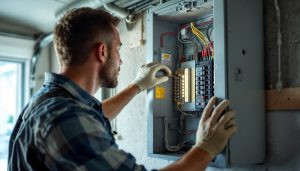
Older San Gabriel Valley homes that need kitchen dedicated circuits often require panel upgrades to accommodate the additional breakers. A 100-amp service panel built in 1970 typically can’t support seven to nine new kitchen circuits plus the rest of the house without exceeding capacity.
Countertop Outlet Spacing and GFCI Requirements
NEC Section 210.52(C) establishes specific rules for countertop outlet spacing. These requirements ensure homeowners have convenient access to power without running extension cords across countertops or stringing outlets along backsplashes.
The code requires outlets along countertop walls to be no more than 48 inches apart, measured horizontally along the wall line. Any point along a countertop should be within 24 inches of an outlet. Outlets must be within 12 inches of countertop edges to count toward the spacing requirement. Most electricians mount kitchen outlets about 4 inches above countertops.
Peninsulas and islands receive special treatment. Countertop spaces longer than 24 inches by 12 inches require at least one outlet. For kitchen island electrical installations, outlets can be mounted on the island end panel, but they must be within the countertop footprint when viewed from above.
All GFCI kitchen outlets serving countertop areas must have ground-fault circuit interrupter (GFCI) protection. Ground faults occur when electrical current finds an unintended path to ground, often through water or a person. GFCI devices detect these faults and cut power in milliseconds, preventing serious shock or electrocution.
GFCI protection is required for all receptacles serving kitchen countertops, regardless of whether they’re within 6 feet of a sink. This includes island and peninsula outlets.
Electricians typically install GFCI outlets at the first receptacle on each circuit, then wire downstream outlets through the GFCI’s load terminals. This provides protection for the entire circuit while requiring only one or two GFCI devices.
Kitchen Island Electrical: Planning for Function and Code Compliance
Kitchen islands have become central features in remodeled kitchens, and planning proper electrical service is essential. The code requires at least one outlet for islands with countertop space 24 inches or longer by 12 inches or wider. Most homeowners want more—islands often serve as primary food prep zones and need multiple outlets for appliances.
Kitchen island electrical installations present unique challenges in older homes. Running circuits to islands requires routing cable through the floor or ceiling. In homes built on concrete slabs—common in parts of the San Gabriel Valley—electricians may need to route circuits overhead from the attic.
Code allows island outlets to be mounted on the island’s end panels or side walls, but they must be within the countertop’s footprint boundaries. All island outlets need GFCI protection and typically connect to the same small appliance circuits serving the rest of the countertops.
Plan island electrical before finalizing cabinetry. Cabinet specifications affect outlet placement options, and changes after cabinets are ordered can delay projects.
Separating Lighting Circuits from Appliance Circuits
Kitchen lighting electrical systems require dedicated circuits separate from the small appliance circuits that serve countertops. This separation prevents kitchen lights from flickering or going dark when someone plugs in a toaster or runs the microwave. The code requires at least one lighting circuit for kitchens, though larger kitchens often benefit from multiple lighting circuits for different zones.
Modern kitchen lighting typically includes overhead fixtures, recessed cans, pendant lights over islands, and under-cabinet task lighting. A standard 15-amp lighting circuit can support roughly 1,440 watts of lighting. LED retrofits have reduced kitchen lighting loads significantly—modern LED equivalents use 8-12 watts compared to 60-100 watts for older incandescent bulbs.
Professional lighting installation services ensure proper circuit sizing, switch placement, and dimmer compatibility. Three-way switches allow control of kitchen lights from multiple locations. Planning three-way switching before drywall goes up is essential.
Permits, Inspections, and Budget Planning for Kitchen Electrical
Any electrical work beyond replacing switches or outlets requires an electrical permit kitchen remodel projects in San Gabriel Valley cities. Permits aren’t bureaucratic obstacles—they’re safety mechanisms that ensure qualified professionals perform work to code and that inspectors verify proper installation before walls close up.
Permit requirements vary slightly between San Dimas, Glendora, La Verne, Covina, and other SGV cities, but all jurisdictions require permits for circuit additions, panel upgrades, and substantial rewiring. Contractors pull permits through the local building department, submit plans showing proposed work, and schedule inspections at key stages.
Kitchen electrical work typically requires two inspections: a rough inspection after circuits are run but before drywall installation, and a final inspection after all devices are installed and the system is energized. Inspectors verify wire sizing, proper connections, GFCI protection, outlet spacing, and overall code compliance.
Budget expectations for kitchen electrical work in the San Gabriel Valley range from $3,000 to $8,000 for complete electrical updates in older homes. This range accounts for running new circuits, installing outlets and switches, upgrading panels if necessary, and completing all permit and inspection requirements.
Lower-end projects ($3,000-$4,500) typically involve kitchens where the existing panel has capacity for new circuits and where access to run wire is straightforward. Mid-range projects ($4,500-$6,500) might require panel upgrades or more extensive rewiring. Higher-end projects ($6,500-$8,000) involve panel replacements, extensive rewiring in homes with difficult access, or kitchens with complex lighting designs.
These estimates cover kitchen electrical work only—they don’t include appliances, light fixtures, or finish materials. Licensed electricians typically charge $100-$150 per hour in the San Gabriel Valley.
Choosing licensed, insured professionals protects homeowners from liability and ensures work meets code. Electrical panel services from qualified contractors include proper permits, professional installation, and guaranteed inspection passage.
Working with Older Homes in the San Gabriel Valley
Remodeling kitchens in 1960s and 1970s San Gabriel Valley homes presents unique electrical challenges. These homes were built under different codes with different expectations about kitchen use. Many have 100-amp service panels, aluminum wiring, ungrounded outlets, and insufficient circuits for modern needs.
Aluminum wiring appears in homes built between 1965 and 1973 when copper prices spiked. Aluminum conducts electricity safely when properly installed, but connections loosen over time as aluminum expands and contracts with heating cycles. Loose connections create resistance, heat, and fire risks. Kitchen remodels in homes with aluminum wiring often include copper circuit replacements for the entire kitchen.
Ungrounded circuits—two-wire systems without ground conductors—were standard before the 1960s and appear in some later construction. Modern code requires grounded circuits throughout kitchens. Upgrading from two-wire to three-wire circuits requires running entirely new cables from the panel to each kitchen outlet and appliance.
Panel capacity determines how much new electrical load a home can support. A 100-amp panel that’s currently serving 80 amps of load can’t accommodate seven new 20-amp kitchen circuits without exceeding safe capacity. Panel upgrades from 100 to 200 amps cost $2,000-$4,000 in the San Gabriel Valley and are common requirements for older-home kitchen remodels.
Access challenges affect costs and schedules. Homes with crawl space access allow relatively straightforward wire routing between floors. Slab-foundation homes require overhead wire runs from attics, which means pulling wire across longer distances. Spanish Colonial and ranch-style homes common in San Dimas and Glendora often have low attic clearances and complex roof lines that complicate wire routing.
Homeowners planning kitchen remodels in older San Gabriel Valley homes benefit from early electrical assessments. Having an electrician evaluate the existing system before design work advances helps identify panel capacity, wiring condition, and access challenges that affect budgets and timelines. Similar assessments help when planning other projects like ADU electrical requirements.
Conclusion
Planning kitchen remodel electrical requirements for older homes requires understanding modern code, calculating circuit needs, and budgeting for substantial upgrades. Kitchens built in the 1960s and 1970s throughout the San Gabriel Valley need extensive electrical work to meet current standards—work that improves safety, functionality, and home value.
Successful kitchen electrical projects start with early planning, accurate assessments of existing systems, and realistic budgets. Working with licensed electricians who understand local code requirements and San Gabriel Valley building departments ensures work passes inspection and performs reliably for decades.
Homeowners in San Dimas, Glendora, La Verne, and Covina who are planning kitchen remodels should schedule electrical consultations before finalizing designs. Understanding electrical requirements early prevents layout compromises and budget surprises later.
Martin’s Electrical & Lighting Company provides kitchen electrical planning, installation, and inspection services throughout the San Gabriel Valley. Our team understands the unique challenges of working in older homes and delivers code-compliant installations that pass inspection the first time.
Get a Free Estimate for your kitchen remodel electrical project and start planning your upgrade with confidence.