When comparing a whole home surge protector vs power strip, most homeowners assume the $20 power strip from the hardware store provides adequate protection for their electronics. The reality is more complicated. Power strips offer limited, localized protection that degrades over time, often failing without warning. Whole-home surge protection systems install at the electrical panel and defend every circuit in the house simultaneously. Understanding the differences between these two approaches helps San Gabriel Valley homeowners make informed decisions about protecting thousands of dollars in appliances, electronics, and sensitive equipment.
How Power Surges Damage Your Home’s Electronics
Power surges happen when voltage levels suddenly spike above the standard 120 volts delivered to most household outlets. These voltage increases can last microseconds or several seconds, but even brief surges damage electronic components. Modern appliances contain sensitive circuit boards, microprocessors, and digital controls that operate within narrow voltage tolerances. When voltage exceeds these limits, components overheat, circuits short out, or systems fail completely.
Utility switching causes the most common surges. When the power company redirects electricity through the grid—switching between power sources, compensating for demand changes, or restoring power after outages—voltage fluctuations ripple through neighborhood power lines. These surges typically register between 200 and 1,000 volts. Lightning strikes near power lines create much larger surges, sometimes exceeding 20,000 volts.
Internal loads generate surges inside your home. Large appliances like air conditioners, refrigerators, and electric water heaters draw significant power when their motors start. This sudden demand creates brief voltage drops, followed by compensating surges when the motor stops. HVAC systems cycling on and off throughout the day subject your home’s circuits to dozens of small surges.
The cumulative effect matters more than isolated incidents. Most electronics don’t fail from one massive surge—they degrade from hundreds or thousands of small voltage increases that slowly damage internal components.
How Power Strip Surge Protectors Work (And Where They Fall Short)
Point-of-use surge protectors use metal oxide varistors (MOVs) to absorb excess voltage. These components act like pressure release valves. When voltage exceeds a specific threshold—typically 330 to 400 volts—the MOV diverts excess electricity to the ground wire, preventing it from reaching connected devices. The MOV automatically resets after the surge passes.
Every MOV has a finite capacity measured in joules. Each surge the device blocks consumes a portion of this capacity. A power strip rated for 1,000 joules might handle ten 100-joule surges or two 500-joule surges before the MOV degrades. Once the absorption capacity depletes, the power strip continues providing electrical power but offers no surge protection. Most units lack indicators showing when protection capacity is exhausted.
Response time limitations create another weakness. Power strips need 5 to 30 nanoseconds to detect a surge and activate the MOV. Large surges from nearby lightning strikes rise faster than the protection circuit can respond. By the time the MOV engages, the surge has already reached connected equipment.
Physical placement compounds these limitations. A surge protector only defends devices plugged directly into its outlets. The television, cable box, and sound system connected to one power strip receive protection. The refrigerator, microwave, garage door opener, HVAC system, and every other appliance in the house remain exposed.
Understanding Joule Ratings: What The Numbers Really Mean
The joule rating indicates how much energy a surge protector can absorb before it fails. Retailers market this number prominently, but the figure alone doesn’t reveal protection quality.
Voltage clamping voltage matters more than joule ratings for practical protection. This specification—also called let-through voltage—indicates at what voltage level the surge protector activates. A unit with a 330-volt clamping threshold responds to smaller surges than one set at 400 volts. Lower clamping voltages provide better protection because they block smaller voltage increases before they stress electronics.
Response time determines how quickly the protection circuit engages. Manufacturers list this specification in nanoseconds. Units responding in 1 to 5 nanoseconds block surges more effectively than those requiring 20 to 30 nanoseconds.
The quality of internal components affects longevity. Inexpensive power strips use low-grade MOVs that degrade quickly. Premium units incorporate higher-grade components that maintain protection capacity longer and handle heat better. A $15 surge protector from a discount store rarely matches the performance or durability of a $50 unit from a reputable manufacturer.
Whole-Home Surge Protection: Panel-Mounted Defense Systems
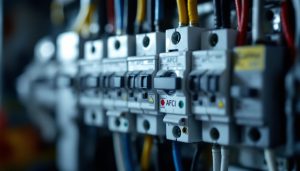
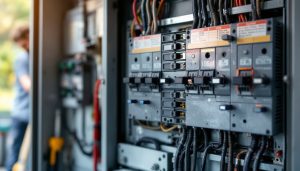
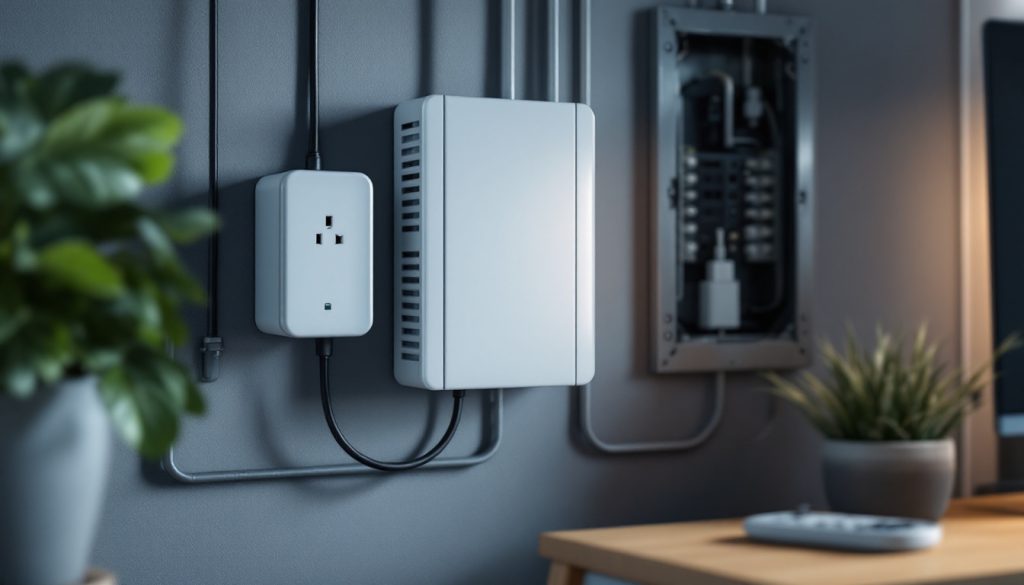
Panel-mounted surge protectors—formally classified as SPD Type 2 devices—install directly inside or beside your electrical panel. These systems defend every circuit in the house simultaneously. When utility surges or nearby lightning strikes send voltage increases through the main power lines, the panel-mounted protector intercepts excess voltage before it reaches any individual circuit breaker.
These systems use more robust surge suppression components than power strips. Residential whole-home units typically handle 50,000 to 80,000 amps of surge current, with absorption ratings between 100,000 and 200,000 joules. This capacity far exceeds what portable power strips provide. Some units include visual or audible indicators showing when protection circuits degrade and need replacement.
Installation requires a licensed electrician. The surge protector connects to a dedicated 240-volt breaker, typically 20 to 40 amps, depending on the model. Professional electrical panel services ensure proper sizing, correct wiring, and code compliance. The process typically takes one to two hours.
Panel-mounted protectors defend against utility surge damage but can’t prevent all equipment failures. These systems block surges entering through main power lines. They don’t protect against surges originating from cable television coax lines, telephone lines, or antenna connections unless those systems also include surge protection at their entry points.
The Layered Approach: Combining Whole-Home and Point-of-Use Protection
Electrical contractors recommend layered surge protection combining panel-mounted and point-of-use systems. This strategy places a high-capacity whole-home protector at the electrical panel to stop large utility surges, then adds individual power strips at sensitive electronics to filter smaller voltage fluctuations the panel-mounted unit lets through.
The whole-home system handles the heavy lifting. When a 10,000-volt surge enters through utility lines, the panel-mounted SPD Type 2 device absorbs most of the excess energy, reducing the surge to perhaps 500 volts. The power strip surge protector at your computer then filters this residual 500-volt surge down to safe levels.
This approach extends the lifespan of both systems. Point-of-use surge protectors deplete their absorption capacity much slower when a panel-mounted system handles large surges first. A power strip that might fail after ten direct utility surges could last years when backed by whole-home protection.
High-value electronics justify dedicated point-of-use protection even with whole-home systems installed. Home theater equipment, computer workstations, medical devices, and smart home control panels contain expensive components sensitive to even minor voltage fluctuations. The power strip also offers convenience—a single button to cut power to multiple devices without unplugging each one individually.
Cost Comparison: Is Whole-Home Protection Worth The Investment?
Point-of-use surge protectors cost between $15 and $50 each, depending on joule rating, number of outlets, and additional features. Protecting multiple rooms requires multiple units. A typical home might need five to eight power strips to cover televisions, computers, kitchen appliances, and other electronics. The total investment reaches $100 to $400, but this approach still leaves hardwired appliances completely unprotected.
Whole-home surge protection costs $200 to $500 installed, depending on the specific model and installation complexity. This price includes the device, professional installation, necessary circuit breakers, and labor. The investment protects every circuit in the house, including expensive appliances like HVAC systems, water heaters, and built-in appliances that can’t connect to power strips.
The math favors panel-mounted protection when considering replacement costs. A single surge that destroys a $4,000 HVAC control board, $2,000 refrigerator, and $1,500 television costs far more than installing whole-home protection upfront. Homeowners insurance might cover surge damage, but deductibles often equal or exceed the cost of the damaged electronics.
Layered protection offers the best value for most homes. Installing a $300 whole-home system plus three or four $30 to $50 quality power strips at sensitive electronics totals $450 to $500—reasonable insurance for a home containing $20,000 to $50,000 in appliances and electronics.
When Power Strips Fail Silently (And You Don’t Know It)
Most power strip surge protectors lack clear indicators showing when protection capacity depletes. Budget models include a simple LED light showing the unit receives power, but this light stays illuminated even after the MOV fails. The outlets continue providing electricity normally. Devices charge, equipment runs, and nothing appears wrong. Meanwhile, the surge protection circuit no longer functions.
Higher-quality surge protectors include protection status lights that change color or turn off when the MOV depletes. Some models emit audible alarms when protection fails. Without clear status indicators, the only way to know a power strip no longer provides protection is to replace it preemptively every two to three years.
Physical damage often goes unnoticed. Power strips shoved behind furniture, tucked under desks, or buried behind entertainment centers accumulate dust, suffer cord damage, and experience wear. Electrical repairs and troubleshooting often reveal power strips with melted outlets, burned cords, or internal damage that continued operating long after they became dangerous.
Manufacturers rarely provide replacement schedules. Surge protectors don’t expire on fixed schedules—lifespan depends on how many surges they absorb. Without monitoring surge events, replacement timing remains guesswork.
Making The Right Choice For Your San Gabriel Valley Home
Choosing between power strips and whole-home surge protection isn’t really a choice—most homes need both. The layered approach provides comprehensive defense against utility surges, lightning damage, and internal voltage fluctuations. Panel-mounted protection handles large surges entering through main power lines, while point-of-use surge protectors filter residual voltage spikes at sensitive electronics.
San Gabriel Valley homeowners face specific surge risks. Summer thunderstorms in the foothill communities bring lightning strikes. Aging utility infrastructure in older neighborhoods experiences frequent switching events. High concentration of homes with central air conditioning creates internal surge activity on hot days when HVAC systems cycle continuously.
Start with a comprehensive electrical panel inspection to assess your home’s current protection status and panel capacity. Many older homes in San Dimas, Glendora, and La Verne have electrical panels that need upgrades before accepting panel-mounted surge protectors. This inspection can also uncover other electrical issues like worn outlets that create fire hazards.
Professional installation ensures proper protection and code compliance. Incorrectly installed surge protection systems fail during surges, exactly when you need them most. Licensed electricians size equipment correctly, verify grounding integrity, test protection circuits, and document installation for warranty coverage.
Don’t wait until surge damage forces expensive repairs or replacements. The surge that destroys your HVAC system could occur tomorrow or never. The only certainty is that homes without protection remain vulnerable.
Get a free estimate for whole-home surge protection installation and protect your San Gabriel Valley home’s electrical system before the next storm season arrives. Martin’s Electrical provides panel-mounted SPD Type 2 installation, electrical panel upgrades, and comprehensive protection assessments throughout San Dimas, Glendora, La Verne, Covina, and surrounding communities.