A San Gabriel Valley homeowner hears the air conditioner start on a hot afternoon and notices the kitchen lights dip for a moment. The lights recover, but the same thing happens during the next cooling cycle. When lights dim when the air conditioner starts, the timing offers an important clue, but it does not identify the cause by itself.
An air-conditioning compressor needs a strong burst of current as it starts. That momentary demand can create a brief voltage drop. The useful question is not simply whether the lights changed. It is how much they dimmed, how long the change lasted, which rooms were affected, and whether the symptom is new or getting worse.
Why lights dim when the air conditioner starts
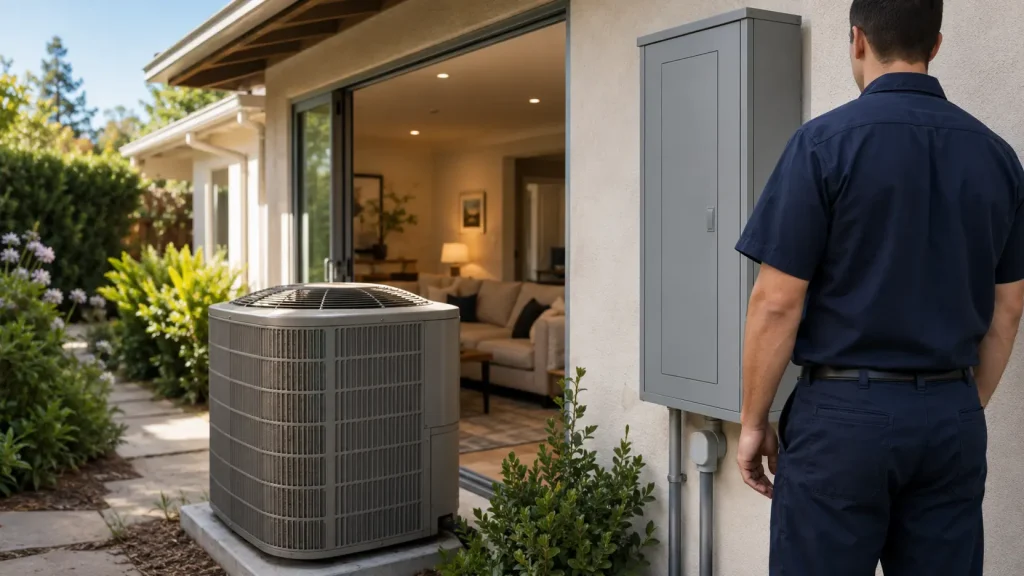
The compressor is usually the largest motor in a residential air-conditioning system. Copeland explains that compressor startup inrush can cause light flicker and other power-quality concerns. A small, split-second dip can occur as the motor accelerates, especially in a home with sensitive LED lighting.
That does not mean every repeated dimming event should be dismissed as normal. The amount and duration of the voltage drop depend on the equipment, its condition, the branch circuit, the electrical panel, the service conductors, and connections between the home and utility system. A symptom that is pronounced, lasts beyond startup, or has recently changed deserves closer attention.
LED lamps and electronic dimmers can make a voltage change more visible than older incandescent lighting. If only one fixture flickers, the problem may be local to that lamp, control, fixture, or connection. If lights across several rooms dip at the same instant the condenser starts, the investigation needs to consider the larger electrical system.
What the pattern can tell an electrician
A very brief dip in several rooms
A short, consistent dip that occurs only at compressor startup may point toward motor-starting demand. An electrician can measure voltage behavior and evaluate the service and panel, while an HVAC technician can assess the compressor and associated equipment. The correct response depends on which side of the system is producing the excessive drop.
Dimming that lasts while the AC runs
Lights that remain noticeably dim throughout the cooling cycle suggest a different condition from a split-second startup event. Possible areas for investigation include an overloaded or undersized circuit, a poor connection, panel or service limitations, and a problem with the air-conditioning equipment. These possibilities require testing, not assumptions.
One room or one fixture changes
If the effect is limited to one room, switch, or fixture, the AC may simply make an existing lighting issue easier to notice. Martin’s guide to flickering lights in a house explains why loose connections, incompatible lamps and dimmers, or branch-circuit conditions can produce similar symptoms.
The symptom is new, stronger, or unpredictable
A system that operated normally for years and suddenly causes deeper dimming should be evaluated. Changes can occur in the HVAC equipment, electrical connections, panel components, or utility supply. Buzzing, heat, a burning odor, repeated breaker trips, or lights that brighten unusually in another area raise the urgency.
If the dimming is pronounced, worsening, or accompanied by another warning sign, call Martin’s Electrical & Lighting Company at (909) 595-1439 for professional electrical troubleshooting before the pattern becomes routine.
Safe observations to make before the service call
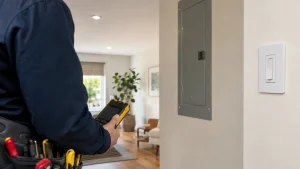
You can gather useful information without opening a panel or touching energized equipment. Note whether the indoor blower or the outdoor condenser has just started when the lights change. Record the rooms affected, the approximate duration, and whether the same lamps react every time. Also note any breaker trip, unusual sound, odor, or warm switch plate.
Check whether the symptom appears when another large load starts, such as an electric dryer or range. If several high-demand appliances create the same whole-house effect, tell the electrician. That pattern can help distinguish an individual HVAC concern from a broader service or connection issue.
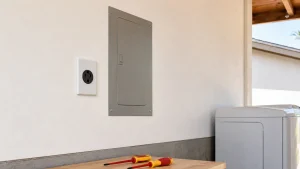
Do not remove the electrical-panel cover, tighten service connections, replace a breaker with a larger one, or add compressor-start equipment as a homeowner experiment. A breaker rating, conductor size, equipment listing, and manufacturer instructions must remain coordinated. A modification intended to mask dimming can leave the real problem unresolved.
When the utility may need to be involved
Not every voltage problem begins inside the home. Southern California Edison states that when a customer reports flickering lights, it inspects its equipment and connections. If the utility does not find a problem on its side, SCE advises that the home’s electrical equipment or wiring may be faulty and recommends contacting a licensed professional.
An electrician can help determine whether the evidence points toward the home’s circuits, panel, or service equipment, or whether the utility should inspect its connection. This matters when dimming affects the entire property, nearby homes report similar symptoms, or the condition is not limited to air-conditioner startup.
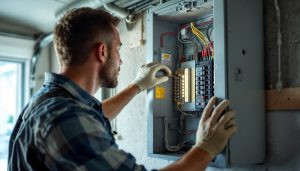
Martin’s electrical repair and troubleshooting service covers flickering and dimming lights, recurring breaker trips, and difficult-to-isolate wiring problems. If testing identifies capacity, condition, or compatibility concerns at the panel, the next step may involve electrical panel service rather than a change to the lighting circuit.
Electrical and HVAC checks should complement each other
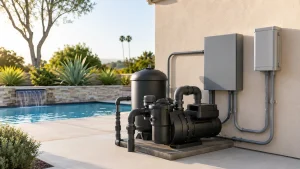
The most reliable diagnosis may require both trades. ENERGY STAR’s HVAC maintenance guidance tells professionals to tighten electrical connections and measure voltage and current on motors, noting that faulty connections can cause unsafe operation and shorten equipment life. An HVAC technician can evaluate the condenser, compressor, contactor, and manufacturer-specific starting requirements.
A licensed electrician can assess voltage drop, circuit and breaker suitability, panel condition, service connections, and the way lighting circuits respond. The professionals can then base any correction on measured conditions rather than treating the lights, compressor, or panel as the automatic culprit.
Permit and inspection requirements vary by jurisdiction and project scope. If diagnosis leads to circuit, panel, service, or equipment changes, the contractor should confirm the requirements that apply to the property and follow the equipment manufacturer’s instructions.
Take a changing dimming pattern seriously
A slight, momentary dip can be associated with compressor startup, but deep, prolonged, new, or worsening dimming deserves professional attention. Keep a simple log of when it happens and which areas are affected. Leave the circuit off and arrange prompt help if the condition is accompanied by heat, odor, crackling, damaged equipment, or repeated breaker trips.
For lights that dim when the air conditioner starts in San Dimas or the surrounding San Gabriel Valley, call Martin’s Electrical & Lighting Company at (909) 595-1439. A licensed electrician can evaluate the lighting response, panel, circuits, and service so the next step is based on evidence rather than guesswork.